

Published by Adeel Virk
Adeel is a founder & project manager at Virk Construction Management, delivering ethical, high-quality residential and commercial projects in NSW and Canberra.
Every Canberra family that starts searching for a home eventually asks the same question. Should we buy an established house that is already finished, or should we build something new on a block of land? On a spreadsheet, the numbers often look close. On the ground, the answer depends on soil, timing, cash flow, and how much risk you can carry. This article compares buy vs. build with the technical detail that most price comparisons leave out.
Why the Buy vs Build Decision Feels So Hard
Most buyers frame the choice as price against quality. An established home has known features, a known street, and a known price. A new build offers fresh finishes, modern insulation, and a layout you can shape around your life. Both framings miss the real issue. The decision is really about which risks you want to own.
With an established home, you inherit the past. Any defects, ageing plumbing, or old wiring come with the keys. With a new build, you own the future, including every delay, approval, and variation that happens between the contract and the handover. Neither path is free of risk. The question is which set of risks suits your budget and your patience.
Many families choose based on kitchen finishes and display homes. Then they discover the footings, the drainage, or the timeline were never part of the conversation. That is where regret usually starts.
The Numbers Behind Buy vs Build in Canberra
Canberra has some useful supply news for buyers. The ACT Government's Housing Supply and Land Release program covers close to 26,000 new homes over five years. Nearly 4,300 homes are planned for release in the coming financial year alone. More blocks should come to market, but releases are staged, so availability shifts from one suburb to the next.
The way land is sold has also changed. A Canberra finance broker notes that most land purchases in 2026 happen through over-the-counter sales rather than ballots. That means you need your finance and your plans ready before the block appears, not after.
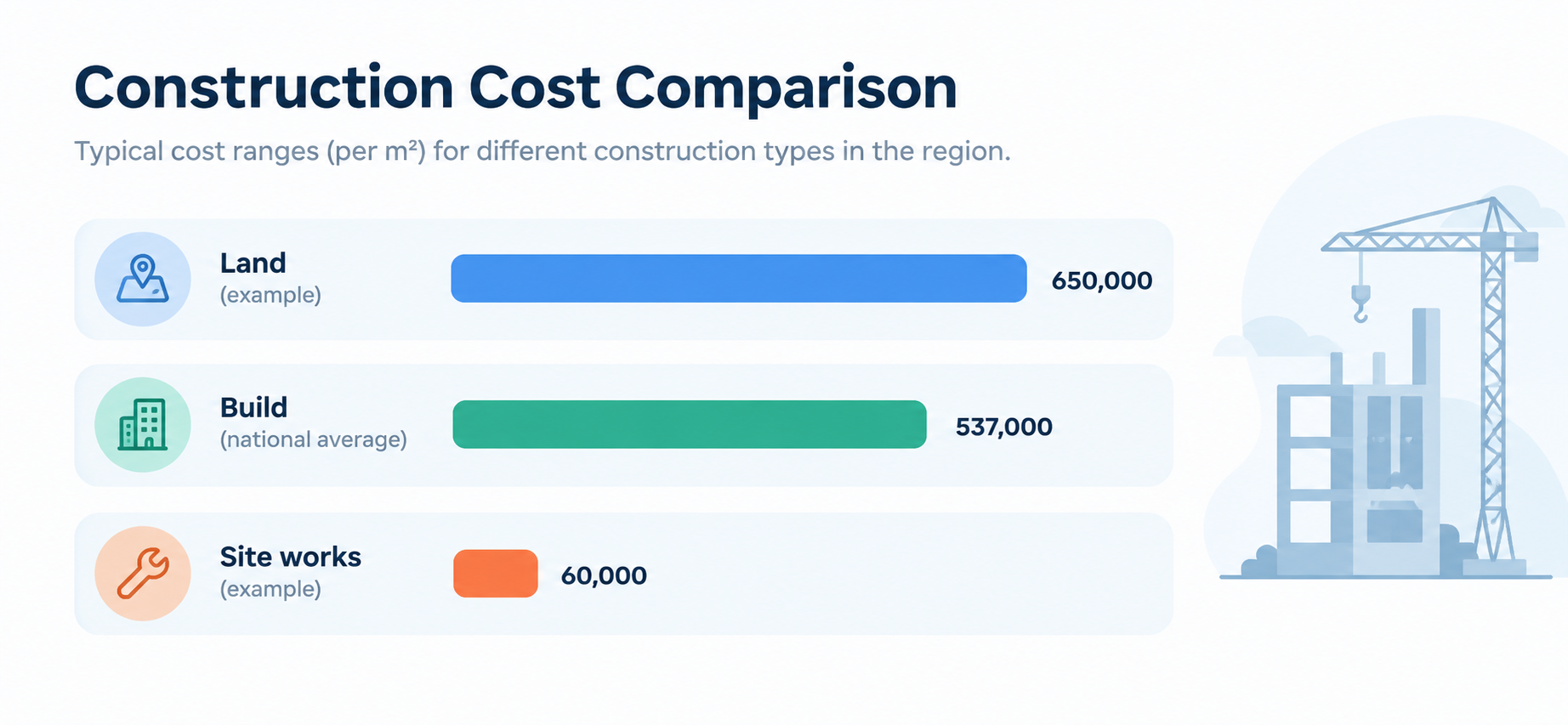
Build costs remain the big unknown. Recent ABS figures cited by industry analysts put the national average cost of building a house at about 537,000 dollars. That average hides a wide spread, because a simple slab home on a flat site costs far less than a two-storey home on a steep block. The table below sets out how the main paths compare across the factors that matter most.
| Factor | Buy an Established Home | Buy a House and Land Package | Buy Then Knockdown Rebuild |
|---|---|---|---|
| Upfront price certainty | High, because the price and condition are visible | Medium, because it depends on the contract inclusions | Lower, because demolition and site costs can vary |
| Stamp duty basis | Full purchase price | Generally the land value only | Full purchase price, then build cost on top |
| Time to move in | Often weeks | Commonly many months | Usually the longest path |
| Main technical risk | Past defects and ageing services | Site conditions, soil class, and fill | Demolition, asbestos, soil, and services |
| Design freedom | Limited to renovation | Limited to the builder range and options | Full design freedom within planning rules |
The chart below shows an illustrative cost stack for a house and land package. The land and site works figures are examples for discussion. The build figure reflects the national average cited from ABS data. Your own quotes will look different, so treat the chart as a starting point rather than a forecast.
The Technical Angle: What Lies Beneath the Block
This is the part most buy vs build comparisons skip, and it often decides the real cost. Canberra soils can be reactive, which means clay expands when wet and shrinks when dry. Australian Standard AS 2870 classifies residential sites such as M, H1, H2, and E. Each class sets the footing and slab design the builder must use.
You can't guess your block's class from a street view. A geotechnical site investigation confirms the class for each lot. A higher reactivity class means deeper footings, reinforced slabs, and higher costs before the framing even starts. Sloping blocks add another layer, with cut and fill, retaining walls, and drainage that can run into serious money.
If you build, your budget should cover several items that a finished house has already absorbed:
A geotechnical site investigation and classification report
Footing and slab design matched to the soil class
Retaining walls, cut, or fill on sloping blocks
Connections to water, sewer, stormwater, and power
Asbestos checks if you demolish an existing dwelling
An established home has a different technical story. The foundation has already been through several seasons of wetting and drying. Doors that stick, cracks above windows, or uneven floors can signal movement that needs a structural check. A pre-purchase building inspection that includes a structural assessment is worth the fee. It shows you what the house has already survived and what it may still need.
Here is a practical way to compare the two paths fairly. Add the land, the build or renovation, the site works, the stamp duty, and the holding costs together. Then divide that total by the usable floor area you actually get. That figure, the cost per usable square metre, is far more honest than comparing headline prices. It also makes it easier to see when a cheap block hides expensive ground conditions.
Cash Flow and Timing During the Build
Money moves differently during a build. Construction loans are paid out in stages, and each stage usually depends on a completed milestone and an inspection. Interest is charged only on the amount drawn, which sounds gentle until the lender releases the frame stage and the interest bill climbs. Your cash flow depends heavily on how fast the builder moves between stages.
Timing risk also hides in the rent question. If you currently rent, you may pay rent and loan interest at the same time while the build runs late. Plan for a buffer of several months. Most families underestimate how often weather, approvals, and supplier delays push a handover date back.
Land settlement usually triggers the first interest charges
Each construction stage needs an inspection before funds are released
Variations approved mid-build add cost and extend the timeline
Rent may continue if the handover date moves
Deposit requirements are another reality check. Industry commentary generally points to a deposit of at least 10 percent of both the land and the construction cost. Lenders assess your ability to service the full combined debt, not just the land. Speak with a broker early, because the borrowing capacity for a build can differ from the capacity for an established purchase.
Choosing the Right Path for Your Situation
There is no universal winner in buy vs build. The better choice depends on your tolerance for uncertainty and how much control you want over the final result.
When buying an established home makes more sense
An established home suits buyers who want to move in soon and avoid long approval and construction timelines. It also suits people who value a known location, mature trees, and an established street character. If the house needs work, a planned renovation can add value without the full risk of a build. Many owners who want more space without moving choose a Canberra home renovation instead of starting over.
When building makes more sense
Building suits buyers who want a layout matched to their household, energy efficiency built in from the start, and fewer surprises from old systems. It also suits people who are comfortable managing a project and making decisions along the way. If you already own an older home on a good block, a knockdown rebuild in Canberra may give you a new home without buying land. Compare that option carefully against purchasing a house and land package, because the demolition and approval steps change the numbers.
Frequently Asked Questions
Is it cheaper to buy or build a house in Canberra?
It depends on the block, the design, and the site conditions. A house and land package can look cheaper on the headline price, but the final figure includes site works, contract inclusions, and holding costs during construction. An established home has a clearer price, although renovation needs can add costs later. The most reliable approach is to compare cost per usable square metre, using written quotes and a site investigation for any block you consider. Do not rely on advertised prices alone.
Does stamp duty apply to a house and land package?
In most cases, duty is calculated on the land value only, not the total package price. The house has not been built at settlement, so the land is the dutiable component. Rules differ between states and territories, and duty settings can change. Confirm the exact figure with the ACT Revenue Office or a conveyancer before you sign any contract. This check takes little time and can save a surprising amount of money.
How long does it take to build a house in Canberra?
Timelines vary widely, but a new home often takes many months from contract signing to handover. Approvals, site works, weather, and supplier delays all affect the schedule. Sloping blocks and difficult soil conditions can add more time. Ask the builder for a written program with milestones, and confirm how delays are handled in the contract. A realistic timeline protects your budget because interest and rent continue while you wait.
Can I build on any block of land I purchase?
Not every block suits every design. The Territory Plan, block dimensions, slope, easements, and soil classification all limit what you can build. Check the zoning and planning rules before you commit to a block. A site investigation and a feasibility review with a builder or designer will show whether your preferred layout fits. Doing this work early prevents expensive redesigns after you have already bought the land.
Conclusion
Buy vs build is not a question with one right answer for every family in Canberra. An established home offers speed, visible condition, and a known location, along with the risks hidden in older systems. Building offers design control and efficiency, along with the risks of soil, timing, and variations. The smartest decision starts with an honest look at your cash flow, your tolerance for delay, and the technical condition of the site or the house. Run the numbers using cost per usable square metre, get written quotes, and check the ground before you commit.
Partner with Virk Construction Management
If you are weighing buy vs build in Canberra, Virk Construction Management can help you test the numbers before you sign anything. We look at site conditions, contract inclusions, realistic timelines, and the hidden costs that often separate a good deal from a difficult one. That means you can compare your options based on facts rather than sales promises. Contact Virk Construction to book a conversation about your block or your existing home.