
Design Bid Build vs Design Build

Published by Adeel Virk
Adeel is a founder & project manager at Virk Construction Management, delivering ethical, high-quality residential and commercial projects in NSW and Canberra.
When you plan a construction project in Canberra or New South Wales, delivery method selection directly affects cost, risk, and performance. The comparison between bid build vs design build remains one of the most important early decisions you make. Both models follow different contractual, procedural, and risk structures that influence project outcomes. Understanding these technical differences helps you control procurement outcomes, compliance obligations, and long-term lifecycle costs.
This guide explains design and build vs design bid build using clear technical detail for informed decision-making. You will gain practical insight aligned with ACT and NSW construction standards and regulatory expectations.
What Is Design Bid Build?
How Design Bid Build Works
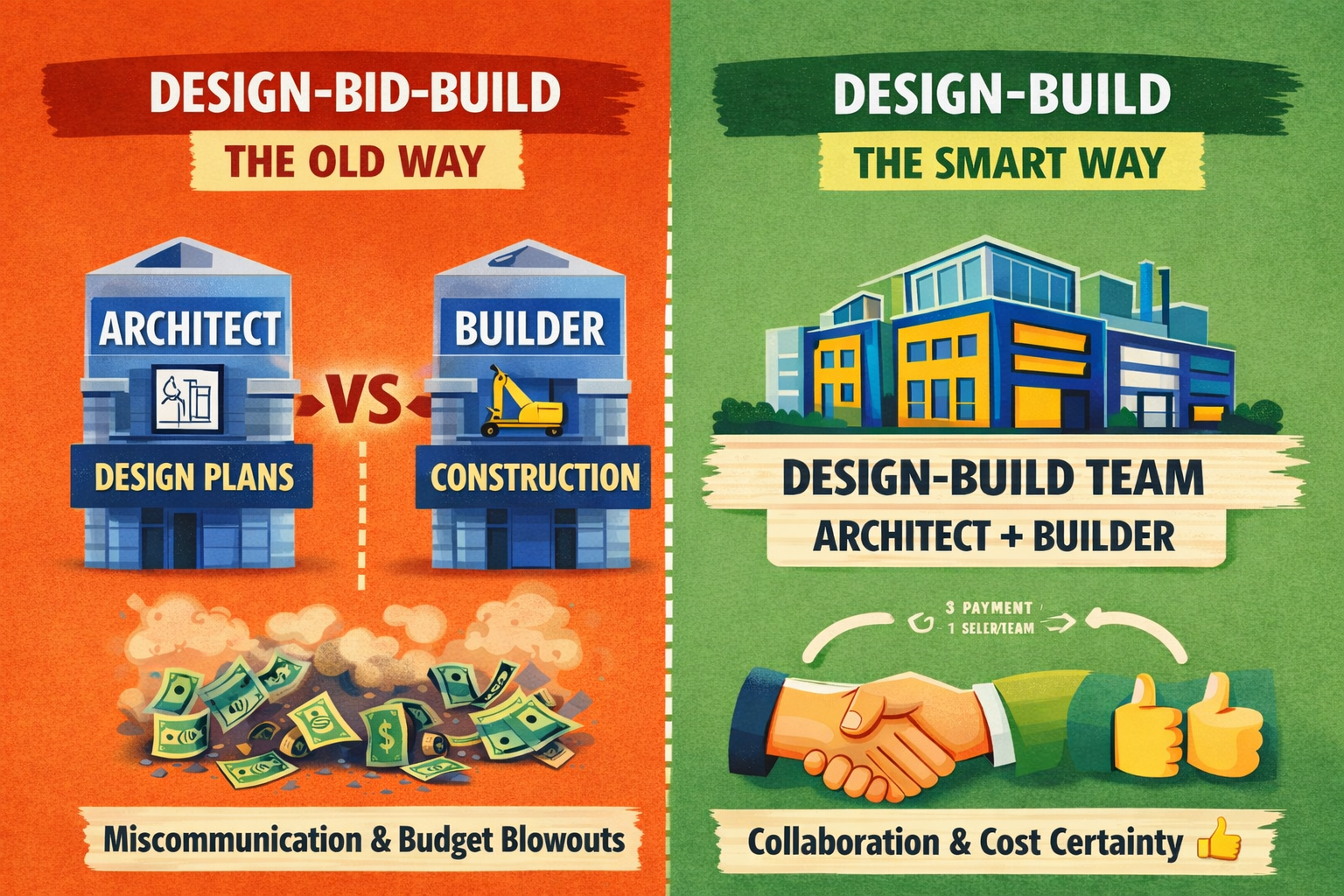
Design bid build is the most traditional and widely used project delivery method across Australian construction markets, especially for government and public sector projects. The process follows a linear structure in which design is fully completed before construction begins. Typically, the project starts with engaging an architect or lead design consultant who develops concept designs, detailed design documentation, and construction-ready drawings. Engineering consultants then prepare structural, civil, mechanical, electrical, and hydraulic designs. Once the full design package is complete, builders are invited to submit competitive tenders.Tender submissions are assessed based on pricing, compliance, contractor experience, and ability to deliver the program. After evaluation, you appoint a builder under a separate construction contract, and construction begins. This sequential process clearly separates design from construction, making responsibilities and deliverables distinct.Contractual Responsibilities and Risk Allocation
In a design bid build model, contractual responsibilities are split between two main parties. The client holds one contract with the design consultant and another with the builder. The design consultant is responsible for accuracy, compliance, and coordination across disciplines, while the builder is responsible for executing the works exactly as documented.
Any errors or omissions in design usually remain the client’s responsibility, making risk management a critical part of project administration. Builders price only based on issued drawings and specifications, so incomplete or unclear documents often result in variations, delays, and additional costs.
This structure requires detailed contract administration and active oversight, which is why experienced project managers are essential. Risk allocation in design bid build tends to favor the client in terms of control, but the client also bears the burden of coordination and dispute resolution if design issues arise.
Benefits of Design Bid Build
Design bid build provides a high degree of design certainty and control, which is particularly valuable for projects with complex specifications or regulatory requirements. All major design decisions, including layouts, finishes, materials, and performance criteria, are confirmed before construction starts. Independent peer reviews and approvals can be conducted during the design phase, reducing uncertainty.
Competitive tendering encourages market-driven pricing transparency, which is often essential for public projects in Canberra and NSW. For example, government buildings and public infrastructure works frequently use design bid build to ensure probity and compliance with procurement policies.
Limitations of Design Bid Build
The main limitation of design bid build is the sequential approach, which extends overall project timelines. Construction cannot commence until design is fully completed, reviewed, and approved. Contractors’ input into constructability comes late, often increasing costs due to design adjustments or unforeseen conditions.
Variations are common when site conditions differ from the documented assumptions. Client involvement is higher, as you must coordinate between designers and builders, and delays in approvals or documentation can have a cascading effect on the schedule.
What Is Design Build?
How Design Build Works
Design build integrates design and construction under a single contractual arrangement. In this approach, you engage a contractor responsible for delivering both the design and construction. The process usually begins with a project brief or performance specification, rather than fully developed construction documents.
The contractor manages architects, engineers, and subcontractors as a coordinated team, streamlining communication and accountability.
A major advantage of design build is the ability to overlap design and construction activities. For instance, site preparation and early works packages can begin while detailed design is still being developed. This approach allows faster program delivery and is particularly valuable for projects where time-to-market or schedule compression is a priority.
Contractual Responsibilities and Risk Allocation
With design build, you deal with a single point of responsibility. The contractor takes on design, coordination, and construction risk, including compliance with regulatory requirements. Errors or clashes between disciplines are resolved internally, reducing the need for client intervention.
Design warranties and performance guarantees are included in the contract, providing clients with confidence that the final project will meet specified outcomes. Clear performance specifications and contractual clauses are essential to ensure the contractor meets both design intent and construction quality standards.
Benefits of Design Build
Design build fosters collaboration between designers and builders from the very start. Constructability is considered during early design stages, which helps avoid costly design changes during construction. Value engineering occurs continuously, optimizing both cost and performance. Program durations are generally shorter compared to design bid build, making this method ideal for commercial and industrial projects with tight schedules. Cost certainty improves once project scope is locked, as the contractor assumes responsibility for managing risks.
Limitations of Design Build
The key limitation of design build is that it relies heavily on a clear and detailed project brief. Ambiguities in the brief can lead to misunderstandings, scope creep, or disputes. You have less control over detailed design decisions compared to design bid build. Changes after contract award may carry higher costs due to the integrated structure. Quality outcomes depend on the contractor’s governance systems, experience, and ability to coordinate multiple disciplines. Selecting an experienced design build contractor is crucial to success.
Design Build vs Design Bid Build: Technical Comparisons
Procurement and Tendering
In design bid build, tenders are invited after full documentation completion, and pricing is based on fixed drawings and specifications. In contrast, design build tenders occur earlier, often at the concept stage. Pricing for design build includes assumptions and risk allowances, and evaluation focuses on technical capability, methodology, and program efficiency rather than price alone.
Cost and Budget Control
Design bid build provides an initial tender price, but variations during construction often increase total costs. Design build offers earlier cost certainty as the contractor assumes design and construction risk. Both methods require careful management of scope changes to maintain budget control. Properly structured contracts in both models help avoid unforeseen financial exposure.
Read More: Cost Plus Model Pricing Model
Program and Scheduling
Design bid build follows a sequential schedule, and any delay in design completion directly affects construction start dates. Design build allows overlapping design and construction activities, accelerating project timelines. Early procurement of long-lead items and concurrent works packages provides significant time advantages, particularly for large commercial or industrial projects.
Quality and Compliance
Design bid build supports independent design verification before construction begins. Design build relies on contractor-led quality systems, often supported by third-party certification or audits. Both models must comply with ACT and NSW building regulations, planning approvals, and certification requirements. Strong governance ensures safety, quality, and statutory compliance in either approach.
Risk Management
Design bid build increases interface risk between designers and builders, with disputes often arising from design intent or documentation gaps.
Design build reduces interface risk through single-point accountability. However, both models require clear contracts, well-defined scope, and structured risk management plans to ensure smooth project delivery.
Choosing the Right Delivery Model in Canberra and NSW
Government and Public Projects
Government projects often prefer design bid build due to transparency, accountability, and competitive tendering requirements. Probity obligations are easier to meet when design and construction are separate. Design build is increasingly adopted for infrastructure projects requiring faster delivery, risk transfer, and integrated coordination.
Commercial and Industrial Projects
Commercial developers frequently select design build for speed, efficiency, and cost certainty. Early contractor involvement helps optimize design for constructability and value engineering.
Design bid build remains suitable when precise architectural outcomes are required. Funding structures, timelines, and complexity influence the choice of delivery method.
Residential and Mixed-Use Projects
Design build simplifies project management for private clients by providing single-point responsibility. Design bid build is preferred for architect-led bespoke projects where design control is critical. Level of client involvement, risk appetite, and project scale influence the best approach. Both models remain viable with careful planning.
Key Considerations Before Deciding
Project complexity, site conditions, regulatory constraints, and funding models must be evaluated before selecting a delivery method. Early contractor involvement benefits technically complex projects. Detailed documentation improves design, bid bid-build efficiency. Clear briefs, performance specifications, and early collaboration support design-build success. Engaging an experienced construction management team ensures risk mitigation, compliance, and program control regardless of the delivery model.
How Virk Construction Management Supports Both Delivery Models
Virk Construction Management delivers projects across Canberra, ACT, and NSW using both design bid build and design build methods. We provide technical guidance through procurement, contract selection, and risk allocation. Our team ensures compliance with local planning approvals, building codes, and certification requirements. We help clients make informed decisions based on project complexity, budget, and timelines.
Whether you choose design and build vs design bid build, execution expertise determines project success. Virk Construction Management supports clients with transparent advice, structured delivery strategies, and a focus on predictable outcomes. From concept to completion, our team ensures quality, compliance, and program certainty, helping you achieve your project goals efficiently.