
How much does it cost to build a house in Canberra? Complete Breakdown

Published by Adeel Virk
Adeel is a founder & project manager at Virk Construction Management, delivering ethical, high-quality residential and commercial projects in NSW and Canberra.
Building a home in Canberra represents one of the most significant financial decisions you will ever make. The Australian Capital Territory offers unique opportunities for homeowners, but understanding the true cost of construction requires more than just looking at advertised prices. This comprehensive guide breaks down every aspect of Canberra house construction cost so you can approach your building project with confidence and clarity.
Understanding the Current Construction Cost Landscape in Canberra
The construction industry in Canberra has experienced notable shifts over recent years. Current market data indicates that building a home in the ACT ranges from approximately $2,800 to $4,500 per square metre for standard residential construction. However, custom builds with premium finishes can easily exceed $5,000 per square metre.
These figures tell only part of the story. The actual amount you will invest depends on numerous interconnected factors that work together to shape your final budget. Construction cost management becomes critical when navigating these variables, as even small decisions early in the planning phase can create significant cost implications down the line.
Breaking Down the Core Cost Components
1. Land and Site Preparation
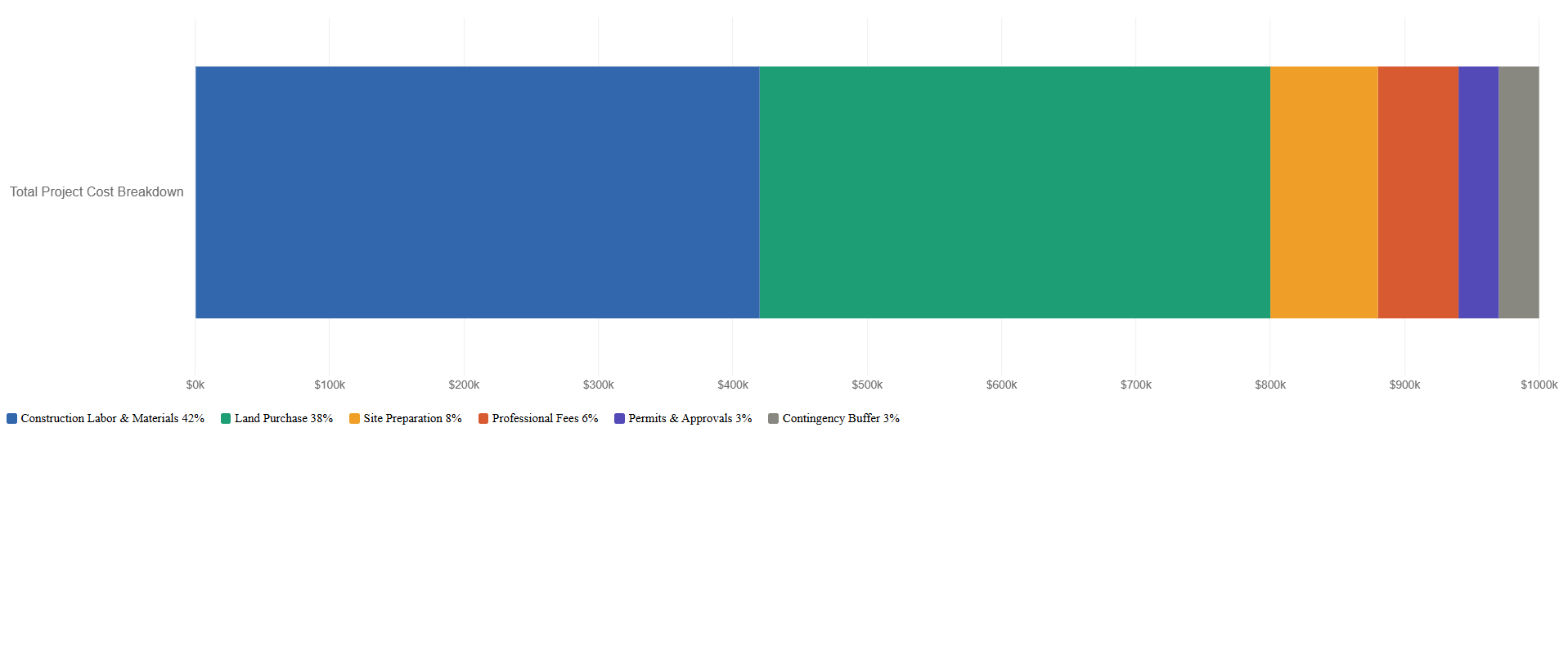
Before any construction begins, you need suitable land. Canberra land prices currently range from $350,000 to $650,000 for residential blocks, representing 40 to 45 percent of your total project cost. The location within Canberra matters enormously. Established suburbs closer to the city centre command premium prices, while emerging areas in Gungahlin, Molonglo Valley, and the Tuggeranong region may offer more accessible entry points.
Site preparation costs vary dramatically based on your block conditions. A flat, cleared block ready for construction requires minimal preparation work. However, sloped terrain, existing structures requiring demolition, or blocks with challenging soil conditions can add $20,000 to $80,000 to your budget before construction even starts.
2. Construction Labor and Materials
Labor costs represent approximately 30 to 40 percent of your total construction budget. Canberra experiences consistent demand for skilled tradespeople, which keeps labor rates at premium levels compared to regional areas. Qualified builders, electricians, plumbers, and specialist tradespeople all command competitive wages in the ACT market.
Material costs have stabilized after the volatility seen in recent years, but they still represent a substantial portion of your budget. Timber framing, bricks, concrete, roofing materials, windows, and doors all contribute to the material component. The choice between standard and premium materials creates significant cost variations. Basic brick veneer construction costs considerably less than full brick or architecturally designed cladding systems.
3. Design and Professional Fees
Professional services typically account for 8 to 12 percent of your total project cost. This includes architectural design, engineering consultations, soil testing, energy efficiency reports, and building surveying. While these costs might seem substantial, investing in quality professional services prevents costly mistakes and ensures your home meets all regulatory requirements.
Working with an experienced construction management team can actually reduce overall costs through better planning, material procurement, and trade coordination. The Cost Plus Model offered by some builders provides transparent pricing where you pay for actual costs plus a fixed management fee, potentially saving 10 to 15 percent compared to traditional fixed-price contracts.
4. Council Permits and Regulatory Costs
Canberra operates under specific ACT government regulations that differ from the surrounding NSW areas. Development Approval and Building Approval are separate processes, each with associated costs. Development applications can range from $2,000 to $8,000, depending on the complexity of your project. Building approval fees, certification costs, and compliance inspections add another $3,000 to $7,000 to your budget.
Understanding the approval pathway early in your planning prevents costly delays and redesign work. Merit track developments process more quickly than impact track developments and require public notification. Factor in realistic timeframes, as approval processes can extend from six weeks to six months, depending on your project scope.
Need Better Cost Control for Your Canberra Project?
Get clear and accurate cost management support. Virk Construction Management helps you control budgets, reduce risks, and keep your project on track in Canberra.
Get Cost GuidanceComprehensive Cost Breakdown by House Size
| House Size | Total Build Cost Range | Cost Per Square Metre | Timeframe |
|---|---|---|---|
| Small Home (120-150 sqm) | $336,000 - $675,000 | $2,800 - $4,500 | 5-8 months |
| Medium Home (180-220 sqm) | $504,000 - $990,000 | $2,800 - $4,500 | 7-10 months |
| Large Home (250-300 sqm) | $700,000 - $1,350,000 | $2,800 - $4,500 | 10-14 months |
| Luxury Custom (300+ sqm) | $1,500,000+ | $5,000+ | 12-18+ months |
These figures represent construction costs only and do not include land purchase, landscaping, driveways, fencing, or interior furnishings. Always add a 10 to 15 percent contingency buffer for unexpected costs that arise during construction.
Factors That Dramatically Impact Your Construction Budget
1. Design Complexity and Architectural Features
Simple rectangular floor plans with standard ceiling heights represent the most cost-effective building approach. Every architectural feature beyond the basic envelope adds cost. Second storeys, complex rooflines, cantilevered sections, large expanses of glass, and open-plan designs all increase construction complexity and therefore cost.
Custom architectural designs allow for unique, personalized homes but require additional investment. Working with designers who understand cost-effective building principles helps balance aesthetic aspirations with budget realities. Even subtle design choices, like reducing the number of corners in your floor plan or standardizing window sizes, create meaningful cost savings.
2. Quality of Inclusions and Finishes
The quality of fixtures, fittings, and finishes creates one of the widest cost variations in residential construction. Home inclusions range from basic functional standards to luxury high-end products. Kitchen and bathroom selections alone can vary by $30,000 to $80,000, depending on your choices.
Flooring options span from basic carpet and vinyl to engineered timber and natural stone. Bathroom fixtures range from standard ceramics to designer tapware and fittings. Kitchen cabinetry can be flat-pack laminate or custom timber with stone benchtops. Every category offers multiple price points, and your selections quickly accumulate into substantial budget differences.
3. Site Conditions and Access
Difficult site access increases costs through additional labor time and equipment requirements. Narrow blocks, steep slopes, or properties with limited street frontage all complicate construction logistics. Retaining walls, extensive excavation, and specialized footings for challenging soil conditions add substantial costs.
Properties in bushfire-prone areas require construction to specific Bushfire Attack Level standards, incorporating fire-resistant materials and design features that increase costs by 10 to 25 percent. Flood-prone areas similarly require elevated floor levels and specific construction methods.
4. Energy Efficiency and Sustainability Features
Modern construction in Canberra requires a minimum 6-star energy efficiency rating. However, increasing this rating to 7 or 8 stars through better insulation, high-performance windows, and efficient heating and cooling systems requires additional investment. Solar panels, rainwater harvesting systems, and sustainable building materials add upfront costs but provide long-term operational savings.
Roofing and external cladding choices significantly impact both initial costs and ongoing energy performance. Premium cladding systems with higher insulation values cost more initially but reduce heating and cooling expenses over the home's lifespan.
Hidden Costs That Catch Homeowners by Surprise
1. Utility Connections and Services
Connecting your new home to essential services often represents an unexpected cost category. Water, sewerage, electricity, gas, and telecommunications connections can total $15,000 to $30,000, depending on your location and existing infrastructure. Properties in newer developments sometimes benefit from included service connections, while established areas or larger rural blocks require individual connection arrangements.
2. Landscaping and Site Completion
Most construction quotes focus on the house structure and do not include comprehensive landscaping, driveways, fencing, or outdoor living areas. A functional basic driveway costs $5,000 to $12,000. Quality boundary fencing adds $8,000 to $20,000. Basic landscaping, including turf, garden beds, and pathways, requires another $15,000 to $30,000. These costs quickly accumulate and should be included in your overall project budget from the outset.
3. Moving and Temporary Accommodation
If you are building on an existing property requiring demolition, or if you are selling your current home before your new build completes, temporary accommodation becomes necessary. Rental costs during construction can total $20,000 to $40,000, depending on your timeframe and rental market conditions. Storage for furniture and possessions adds another ongoing expense.
Construction Cost Management Strategies for Canberra Builders
Effective construction cost management separates successful building projects from those plagued by budget blowouts and delays. Understanding how professional builders approach cost control helps you make informed decisions throughout your project.
1. Transparent Pricing Models
Traditional fixed-price building contracts provide cost certainty but often include significant builder margins to cover unknown risks. The alternative approach, using a Cost Plus or Open Book model, provides complete transparency where you pay actual trade and material costs plus a fixed management fee. This approach can reduce overall costs by 8 to 12 percent while providing full visibility into where every dollar goes.
Professional construction management involves detailed planning, accurate cost estimation, and proactive problem-solving throughout the build. Experienced project managers coordinate trades efficiently, prevent delays, and identify cost-saving opportunities without compromising quality.
2. Value Engineering Without Compromise
Value engineering identifies ways to achieve your design goals through more cost-effective methods without sacrificing quality or functionality. This might involve alternative materials that deliver similar aesthetics at lower costs, simplified construction details that maintain visual appeal, or strategic timing of work packages to maximize efficiency.
Working with builders who understand value engineering principles ensures you receive maximum value from your investment. Every element undergoes evaluation to determine if a more cost-effective approach exists that still meets your requirements and expectations.
3. Detailed Scope Definition
Vague or incomplete project scopes create the conditions for cost variations and disputes during construction. Comprehensive documentation defining every aspect of your build, from foundation systems to door handles, prevents misunderstandings and surprise costs. Invest time in detailed specifications before signing contracts rather than making decisions during construction when changes become expensive.
Choosing the Right Building Approach for Your Budget
1. Project Homes and Standard Designs
Project homes offer the most predictable costs and fastest construction timeframes. These designs use standard materials, established trade relationships, and efficient building processes. Customization options exist within parameters, allowing some personalization while maintaining cost efficiency.
Project homes suit buyers prioritizing budget certainty and faster completion over unique architectural expression. The tradeoff involves less flexibility in design and often means accepting standard inclusions rather than customized selections.
2. Custom Design and Build
Custom homes provide complete design freedom to create exactly the home you envision. This approach requires higher investment in design fees and typically results in higher overall costs due to unique construction requirements. However, the result perfectly matches your lifestyle, site conditions, and aesthetic preferences.
Custom builds benefit from working with integrated teams where designers and builders collaborate from the earliest stages. This approach, sometimes called design and construct, ensures buildability and cost considerations inform design decisions from the outset.
3. Owner-Builder Considerations
Some homeowners consider managing their own construction project to save on builder margins. While this approach can reduce costs, it requires substantial time commitment, construction knowledge, and project management skills. The complexity of coordinating multiple trades, managing contracts, ensuring compliance, and maintaining quality control should not be underestimated.
Owner builders assume all risks typically managed by professional builders. Insurance requirements differ, and achieving the same trade rates and material pricing available to established builders proves difficult without industry relationships and volume purchasing power.
Regional Variations Within the ACT and Surrounding NSW Areas
Construction costs vary between Canberra suburbs and the surrounding NSW region. Inner north and inner south suburbs typically see higher costs due to access constraints, heritage considerations, and premium land values. Emerging suburbs in Gungahlin, Molonglo Valley, Belconnen, and Tuggeranong often provide more straightforward building conditions with better access and fewer constraints.
Properties in the surrounding NSW region, including Queanbeyan, Bungendore, and Yass, generally experience slightly lower construction costs, offset partially by potential travel charges for trades and materials. Understanding these regional variations helps set realistic budgets based on your chosen location.
Creating a Realistic Construction Budget
Comprehensive Budget Template
Your construction budget should include:
Land purchase and associated costs
Site preparation and demolition, if required
Construction costs based on per square metre rates
Design and professional fees
Council fees and approval costs
Utility connections and service installations
Landscaping, driveways, and fencing
Contingency buffer of 10 to 15 percent
Temporary accommodation, if applicable
Moving and establishment costs
Financing Considerations
Most construction projects require staged financing where funds are released progressively as construction milestones are completed. Lenders typically provide progress payments based on slab, frame, lockup, fixing, and completion stages. Understanding the payment schedule and ensuring adequate cash flow throughout construction prevents financial stress during the build.
Interest during construction accumulates but typically converts to a standard mortgage once construction completes. Factor in these holding costs when calculating your overall project budget and ongoing serviceability.
Working With Virk Construction Management: Your Canberra Building Partner
Navigating the complexities of house construction in Canberra requires experienced guidance, transparent communication, and unwavering commitment to quality. Virk Construction Management brings over 17 years of combined industry experience to residential and commercial construction projects throughout Canberra and NSW.
How do we approach?
Our approach centers on ethical practices, complete transparency, and putting client interests first. Through our innovative Open Book model, you gain full visibility into every cost component of your project. This transparency typically delivers 8 to 12 percent savings compared to traditional building contracts while ensuring you receive exceptional quality and craftsmanship.
Mature Understanding
We understand that building a home represents more than just a construction project. It embodies your vision for your future, your family's needs, and your financial security. Our team guides you through every decision, from initial feasibility and design through to completion and handover. With active A-Class Builder Licenses in both ACT and NSW, we handle projects of any size and complexity.
Our project management expertise ensures your build progresses efficiently, on schedule, and within budget. We coordinate all trades, manage material procurement, conduct quality inspections, and maintain constant communication throughout your project. This comprehensive approach prevents the stress and uncertainty that often accompany construction projects.
Let's begin with project estimation.
Ready to start your building journey in Canberra? Contact Virk Construction Management today for a detailed consultation. We will help you understand your options, establish a realistic budget, and create a roadmap to achieving your dream home without unnecessary stress or surprise costs. Our commitment to ethical practices and transparent pricing means you can build with confidence, knowing your investment is protected and your vision will become reality.
Visit our projects gallery to see examples of our completed work throughout Canberra, or explore our current construction projects to see our quality standards in action. Let us show you why homeowners throughout Canberra and the ACT choose Virk Construction Management for their building projects.
Contact Information: Email: Office@virkconstructionmanagement.com.au Phone: 0451 552 095
Conclusion
Building a house in Canberra in 2026 requires careful planning, realistic budgeting, and experienced professional guidance. While costs range from $2,800 to $5,000 or more per square meter, depending on your specifications, understanding the factors that drive these costs empowers you to make informed decisions throughout your project.
Effective construction cost management, transparent pricing, and working with ethical builders committed to your success ensure your investment delivers the home you envision without the stress and uncertainty that plague many building projects. The Canberra market offers excellent opportunities for homeowners willing to invest time in proper planning and partnering with the right building professionals.
Your dream home awaits. With proper preparation, realistic expectations, and the right team supporting you, building in Canberra can be a rewarding journey that culminates in a home perfectly suited to your needs and lifestyle.