
Office Fitouts Canberra: A Complete Guide to Creating Functional Commercial Spaces

Published by Adeel Virk
Adeel is a founder & project manager at Virk Construction Management, delivering ethical, high-quality residential and commercial projects in NSW and Canberra.
When you walk into a well-designed office space, you can feel it immediately. Everything flows naturally. The lighting works with you instead of against you. The layout makes sense. Your team actually wants to be there. That is what quality office fitouts in Canberra can deliver, and understanding the process behind creating these spaces matters more than most business owners realize.
The commercial fitouts industry in Canberra has evolved significantly over the past decade. What used to be cookie cutter cubicles and fluorescent lighting has transformed into dynamic workspaces that adapt to how teams actually work. Whether you are planning your first office renovation or managing a complete commercial space overhaul, knowing what goes into professional fitouts helps you make better decisions and avoid expensive mistakes.
Planning an Office Fitout in Canberra?
Create a workspace that works for you. Virk Construction Management delivers efficient office fitouts with smart layouts, quality finishes, and on-time delivery.
Start Your FitoutUnderstanding Commercial Fitouts in the Canberra Market
Commercial fitouts Canberra projects involve much more than choosing paint colors and furniture. The process transforms an empty or existing commercial space into a functional, compliant, and productive work environment. In the Australian Capital Territory, this work must align with strict building codes, fire safety regulations, and accessibility standards that protect both employees and visitors.
The Canberra market presents unique considerations. The city has one of the highest concentrations of government offices and professional services firms in Australia. This creates particular demand for office fitouts that meet security requirements, integrate modern technology, and support collaborative work styles. Many Canberra businesses also prioritize sustainability, seeking energy efficient lighting, low VOC materials, and waste reduction strategies during construction.
Types of Commercial Fitouts
Not all fitouts serve the same purpose. Understanding the different categories helps clarify what your project actually needs:
Office Fitouts: These projects focus on creating functional workspace for teams. Modern office fitouts balance private work areas with collaborative zones, meeting rooms, and break out spaces. The goal is supporting productivity while reflecting company culture through design choices.
Commercial Shop Fitouts Canberra: Retail environments require completely different considerations than office spaces. Customer flow, product display, lighting for merchandise, point of sale integration, and brand expression take priority. Shop fitouts in Canberra must also comply with retail specific regulations around accessibility and safety.
Industrial Fitouts: Manufacturing, warehousing, and distribution facilities need heavy duty infrastructure. Industrial fitouts handle specialized flooring, equipment installation, power distribution, and material handling systems. Safety and operational efficiency drive every decision.
Warehouse Fitouts: Similar to industrial spaces but often focused on storage and logistics. Warehouse fitouts incorporate racking systems, loading dock improvements, inventory management zones, and sometimes office areas within the warehouse footprint.
Speculative Suite Fitouts: Property owners preparing spaces for unknown future tenants create spec suites. These fitouts provide a baseline level of finish that appeals broadly while allowing customization later. The commercial fitouts approach balances cost control with market appeal.
The Planning Phase: Where Most Fitout Projects Succeed or Fail
Experienced builders in Canberra will tell you the same thing: planning determines outcomes more than any other factor. A rushed or incomplete planning phase creates problems that multiply throughout construction and beyond.
1. Space Analysis and Needs Assessment
Before any design work begins, you need clear answers to fundamental questions. How many people will use this space? What type of work do they perform? Do they need private offices, open plan arrangements, or a hybrid model? How much storage does the business require? Where do clients or visitors enter and move through the space?
These questions sound simple, but answering them thoroughly takes time and input from multiple stakeholders. The operations team knows workflow requirements that management might overlook. IT staff understand data infrastructure needs that affect layout options. HR considers employee wellbeing factors that impact retention and productivity.
A thorough space analysis also examines the existing conditions of the commercial property. What is the current electrical capacity? Does the HVAC system handle increased occupancy? Are there structural limitations on where walls can be placed? Understanding these constraints early prevents expensive surprises during construction.
2. Regulatory Compliance in the ACT
The Australian Capital Territory maintains comprehensive building regulations that affect every commercial fitout. Projects must obtain appropriate approvals before work begins. Depending on the scope, this might include Development Approval from the planning directorate and Building Approval from Access Canberra or a private certifier.
The National Construction Code sets baseline standards, but the ACT often has additional requirements. Fire safety provisions, disabled access compliance under the Disability Discrimination Act, and environmental performance standards all factor into fitout design. Working with professionals who understand these regulations saves time and prevents compliance issues that can halt projects.
Many businesses underestimate the approval timeline. Straightforward commercial fitouts might receive approvals in six to eight weeks, while complex projects with structural changes can take several months. Starting this process early keeps your project on schedule. The construction project development process in Canberra requires patience and proper documentation.
3. Budget Development and Cost Control
Commercial office fitouts in Canberra typically range from $800 to $2,500 per square meter depending on specification level and complexity. A basic refresh with new paint, carpet, and minor changes sits at the lower end. High end fitouts with custom joinery, premium finishes, and extensive services upgrades reach the upper range or beyond.
The most reliable approach to cost control involves detailed scope documentation before requesting quotes. Vague requirements lead to wide ranging quotes that are difficult to compare meaningfully. When you specify exactly what you want built, trades can price accurately and you can make informed decisions.
Understanding the advantages and disadvantages of the cost plus pricing model helps clarify which contracting approach suits your project. Cost plus provides transparency where every expense is visible, while lump sum contracts offer price certainty but less flexibility for changes.
Design Considerations for Modern Office Fitouts
Good design balances aesthetics with functionality. Beautiful spaces that do not support how people actually work create frustration despite their appearance. The reverse is also true: purely functional spaces without attention to design feel sterile and uninspiring.
1. Layout and Space Planning
Open plan offices dominated commercial design for years, but the pendulum has swung back toward balance. Most successful modern fitouts incorporate zones for different work modes. Quiet focus areas coexist with collaborative spaces. Meeting rooms of various sizes provide options for different group sizes and purposes. Phone booths or small private rooms handle confidential calls without disrupting others.
The specific layout depends heavily on your industry and work style. Creative agencies might prioritize large collaborative areas with flexible furniture. Legal or financial services firms often need more enclosed offices for client confidentiality. Technology companies frequently want adaptable spaces that can evolve as teams grow or change structure.
Circulation patterns matter more than many people realize. How employees move through the space affects both efficiency and interaction. Strategic placement of shared resources like printers, kitchen areas, and meeting rooms can encourage beneficial casual interactions or minimize disruption depending on your goals.
2. Lighting and Acoustic Design
Lighting quality directly impacts employee wellbeing and productivity. Natural light remains the gold standard when available. Maximizing daylight through layout choices, window treatments, and internal glazing creates more pleasant work environments. When natural light is limited, layered artificial lighting with adjustable levels gives people control over their immediate environment.
LED lighting has become standard in commercial fitouts for good reason. The technology offers energy savings, long lifespan, and excellent control options. Smart lighting systems can adjust color temperature throughout the day to support circadian rhythms, potentially improving sleep quality and alertness.
Acoustics present one of the most common complaints in open plan offices. Sound travels easily through open spaces, making concentration difficult. Effective acoustic treatment uses multiple strategies: sound absorbing ceiling tiles, acoustic panels on walls, carpet or acoustic underlay for flooring, and thoughtful placement of noise generating equipment away from quiet work areas.
3. Technology Integration
Modern office fitouts must accommodate substantial technology infrastructure. Data cabling, power distribution, AV equipment, and wireless systems all need proper planning and installation. Under floor or overhead cable management keeps the space clean while allowing future changes.
Consider not just current technology needs but near future requirements. Installing conduit for potential future cabling costs little during construction but saves significantly if needed later. Similarly, ensuring adequate electrical capacity prevents expensive upgrades when equipment needs change.
Video conferencing has become essential for most businesses. Meeting rooms need appropriate cameras, microphones, speakers, and screens integrated cleanly. Conference room booking systems, digital signage, and access control systems also feature in many modern fitouts.
The Construction Process for Commercial Fitouts
Once planning and design are complete, construction begins. Understanding this process helps manage expectations and identify when things are progressing normally versus when intervention is needed.
1. Project Timeline and Sequencing
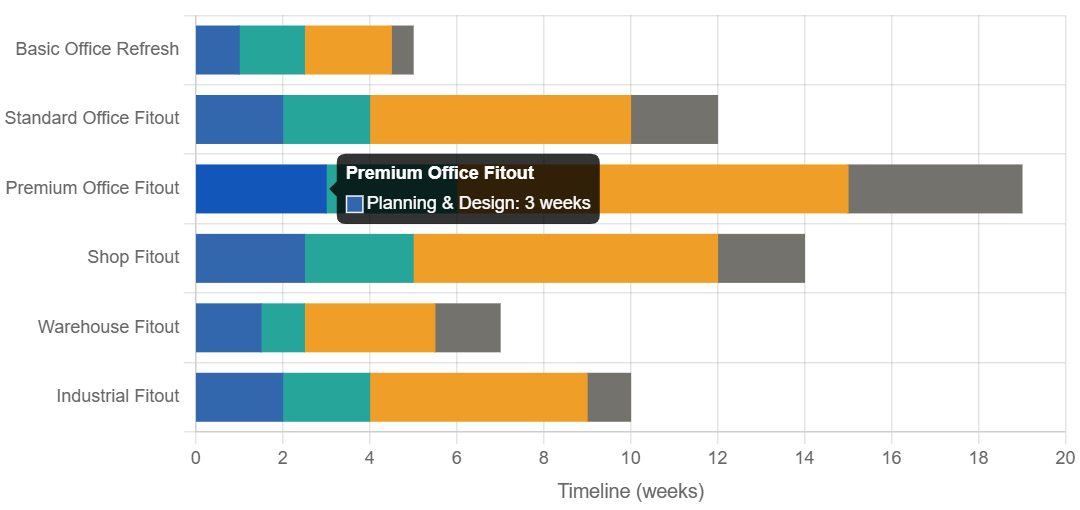
A typical commercial fitout in Canberra takes eight to sixteen weeks from construction start to practical completion. Smaller projects or simple refreshes might complete faster. Large office fitouts with extensive services work or custom elements can extend to six months.
The work follows a logical sequence. Demolition and strip out happen first, removing existing fitout elements and exposing the base building. Next comes rough in work: new walls framed, electrical and data cabling installed, HVAC modifications completed, and plumbing if needed. Then comes the refinement: plasterboard installed and finished, painting completed, flooring laid, and lighting fixtures installed. Finally, furniture, IT equipment, and final touches bring the space to completion.
Trade coordination becomes critical during the middle phase when multiple subcontractors work simultaneously. Effective site management ensures each trade has access when needed, materials arrive on time, and quality standards are maintained. Similar to understanding what happens during Stage 4 construction, each phase builds on the previous work.
2. Quality Control and Inspections
Regular inspections throughout construction catch problems early when they are cheapest to fix. Your project manager or site supervisor should conduct daily site visits, checking work quality, safety compliance, and progress against schedule.
Formal inspections happen at key milestones. After framing is complete but before walls are closed, an inspection verifies that electrical, data, and other services are installed correctly. After painting but before furniture installation, a walkthrough checks finishes meet specifications. Before practical completion, a detailed defects inspection identifies any items requiring attention.
Building certifiers conduct required inspections per the National Construction Code and local regulations. These inspections are not optional and must be scheduled at appropriate points. Fire safety installations, emergency lighting, and disabled access features receive particular attention.
Comparison of Fitout Types and Investment Levels
| Fitout Type | Typical Cost Range (per sqm) | Timeline | Key Features | Best Suited For |
|---|---|---|---|---|
| Basic Office Refresh | $800 - $1,200 | 4-6 weeks | Paint, carpet, minor lighting updates | Existing functional spaces needing cosmetic update |
| Standard Office Fitout | $1,200 - $1,800 | 8-12 weeks | New partitions, standard finishes, upgraded services | Most commercial office needs |
| Premium Office Fitout | $1,800 - $2,500 | 12-16 weeks | Custom joinery, high-end finishes, integrated technology | Professional services, executive suites |
| Industrial Fitout | $600 - $1,400 | 6-10 weeks | Heavy duty flooring, equipment installation, specialized services | Manufacturing, workshops |
| Retail Shop Fitout | $1,400 - $3,000 | 8-14 weeks | Custom displays, specialty lighting, branded finishes | Retail stores, showrooms |
| Warehouse Fitout | $400 - $900 | 4-8 weeks | Racking systems, loading modifications, basic offices | Distribution, storage facilities |
These ranges reflect typical projects in the Canberra and NSW markets. Actual costs vary based on specific requirements, site conditions, and material selections. Budget-friendly commercial fitouts in NSW require careful planning but remain achievable with the right approach.
Cost Factors and Budget Optimization Strategies
Several factors influence final fitout costs beyond the base per square meter rates. Understanding these helps estimate budgets accurately and identify opportunities for value engineering.
Major Cost Drivers
Mechanical and electrical services often represent the largest single cost category in commercial fit-outs. Relocating HVAC systems, upgrading electrical capacity, or installing a comprehensive data infrastructure adds substantial expense. Sometimes these costs are unavoidable to meet functional requirements, but careful design can minimize unnecessary work.
Partitioning and joinery come next. Full-height walls cost more than partial-height screens. Custom-built joinery costs significantly more than modular systems. Each design choice involves tradeoffs between cost, aesthetics, and functionality. Experienced designers help navigate these decisions to optimize value.
Finishes vary enormously in price. Commercial-grade carpet might cost $50 to $120 per square meter installed, while specialty flooring systems can exceed $300 per square meter. Paint seems simple, but quality varies, and premium architectural coatings deliver better coverage and durability than cheap alternatives.
Value Engineering Opportunities
Value engineering identifies ways to reduce costs without sacrificing essential functionality or quality. This process works best when all stakeholders participate: the client, designer, and builder collaborate to find solutions.
Some common value engineering strategies include standardizing elements to reduce customization, selecting alternative materials with similar performance at lower cost, simplifying complex details that add cost without proportional benefit, and staging work to spread costs over multiple phases.
The key is distinguishing between cost-cutting and value engineering. Simply choosing cheaper everything usually backfires through poor performance, rapid wear, or functionality problems. True value engineering maintains or improves outcomes while spending resources more efficiently.
Staging and Phasing Options
Large commercial fitouts can be staged to manage cash flow or minimize business disruption. One floor is completed before moving to the next. Or the office fitout happens in sections, allowing parts of the business to continue operating throughout construction.
Phasing adds some complexity and potentially a modest cost premium for mobilization and demobilization multiple times. However, the benefits often outweigh these factors when staging enables the business to continue earning revenue or spreads capital expenditure across budget periods.
Sustainability in Modern Commercial Fitouts
Environmental considerations have moved from optional nice-to-have elements to essential project requirements for many Canberra businesses. Government agencies, in particular, often mandate sustainability targets for their office fit-outs.
Energy efficiency starts with lighting and HVAC. LED lighting with occupancy sensors reduces electricity consumption dramatically compared to older systems. HVAC zoning allows unused areas to receive less conditioning, saving energy without affecting occupied spaces.
Material selection impacts environmental performance. Low VOC paints and adhesives improve indoor air quality. Recycled content materials reduce virgin resource consumption. Local sourcing cuts transportation emissions. These choices align with both environmental values and employee health.
Construction waste management diverts material from landfills. Demolition material gets sorted for recycling rather than mixed disposal. Offcuts and packaging get collected separately. Many commercial fit-out projects achieve seventy to eighty percent waste diversion with proper planning.
Some businesses pursue formal green building certification through programs like Green Star or NABERS. These frameworks provide structured approaches to sustainability and third-party verification of performance. Certification adds costs but can deliver marketing benefits and potentially higher lease values or employee satisfaction.
Selecting the Right Team for Your Commercial Fitout Project
The relationship between the client and the construction team significantly influences project outcomes. Choosing partners carefully pays dividends throughout the process and beyond.
Evaluating Commercial Fitout Specialists
Look for demonstrated experience with projects similar to yours. A builder specializing in retail shop fitouts brings different expertise than one focused on industrial fitouts. Review their portfolio and speak with previous clients about their experience.
Understanding construction contracts in Canberra protects both parties and sets clear expectations. Reputable builders provide transparent contracts explaining scope, costs, timelines, and responsibilities. They discuss variation processes, payment schedules, and dispute resolution mechanisms upfront.
Professional accreditation matters. Master Builders Association membership demonstrates commitment to industry standards. Proper licensing and insurance coverage protect you if problems arise. Do not assume these are in place; request proof and verify current status.
Communication style deserves attention during selection. You will interact with this team frequently for months. Choosing builders who respond promptly, explain clearly, and listen to concerns makes the entire experience better. Trust your instincts about whether the relationship will work well.
The Virk Construction Management Approach
At Virk Construction Management, we deliver commercial fitouts, office fitouts, and various fitout projects across Canberra, NSW, and the broader ACT region with a focus on transparency and quality outcomes.
Our team brings seventeen years of combined construction experience to every project. We understand Canberra building regulations thoroughly, having successfully delivered projects for both private clients and government agencies. This experience means we anticipate challenges before they become problems and know how to navigate approval processes efficiently.
We offer an open-book cost-plus model that provides complete visibility into project costs. Rather than marking up every item, we charge a transparent management fee and pass through trade and supplier pricing with our bulk discounts. This approach typically saves clients ten percent or more compared to traditional contracting while maintaining quality standards.
Our project management process includes detailed scheduling with Gantt charts showing task dependencies and critical path items. Regular progress reporting keeps you informed. We conduct frequent quality inspections and manage defects systematically. The goal is delivering your fitout on time, within budget, and built to last.
Whether you need a straightforward office refresh or a complex commercial fitout involving multiple trades and services coordination, we adapt our approach to your specific requirements. Our commercial fitouts expertise extends from concept through to practical completion and beyond.
Common Challenges and How to Avoid Them
Even well-planned fitout projects encounter obstacles. Knowing the common pitfalls helps you avoid or manage them effectively.
1. Underestimating Timeline Requirements
Clients frequently expect faster completion than realistic timelines allow. Approvals take time. Materials have lead times. Trades have booking schedules. Rushed projects often cost more and deliver lower quality than properly paced work.
Build realistic timelines with contingency buffers for unforeseen delays. Weather, material delivery issues, or discovered site conditions can all extend schedules despite best efforts. Starting earlier and pacing work appropriately reduces stress and improves outcomes.
2. Scope Creep and Variations
Projects evolve during construction as clients see spaces take shape and reconsider initial decisions. Some changes make sense. Others blow budgets and delay completion unnecessarily.
Establish a clear change management process from the start. Define how variations get requested, priced, and approved. Understanding the cost and schedule impact of each change helps make informed decisions about what is truly necessary versus nice to have.
3. Communication Breakdowns
Misunderstandings between clients, designers, and builders create most conflicts during construction. Someone assumes something was included. Instructions get misinterpreted. Decisions get made without proper input.
Regular structured communication prevents most problems. Weekly site meetings with documented minutes create clarity. Having a single point of contact on both the client and builder sides streamlines decision-making. Putting agreements in writing avoids later confusion about what was decided.
4. Neglecting Change Management
The fitout project is not just about construction. Employees need preparation for their new workspace. IT systems require migration planning. Furniture and equipment need coordination.
Develop a change management plan addressing these operational aspects separately from the construction work. Who notifies staff about the move? When does IT begin transferring systems? How do clients or customers find you during transition? Addressing these questions early prevents chaotic moves and business disruption.
Trends Shaping Office Fitouts in Canberra
The commercial fitout industry continues evolving in response to changing work patterns and employee expectations. Several trends are particularly prominent in the Canberra market.
1. Hybrid Work Accommodation
The rise of hybrid work models, where employees split time between office and home, has fundamentally changed office fitout requirements. Companies need less dedicated desk space per employee but more diverse space types.
Hotels’ desks or hoteling systems, where employees book workstations as needed, reduce real estate requirements. However, this requires investment in booking systems, storage solutions for personal items, and technology to make hot desking practical.
Focus rooms or quiet pods provide private space for video calls or concentrated work. These enclosed micro environments within open offices address acoustic concerns while maintaining space efficiency.
2. Biophilic Design Elements
Incorporating nature into office environments improves employee well-being and productivity, according to substantial research. Biophilic design can be simple or elaborate, depending on the budget.
Living plant walls create dramatic focal points while improving air quality. Smaller-scale options include desk plants, planter boxes, and natural materials like timber and stone. Views to outdoor green spaces, where available get maximized through layout and glazing choices.
Natural patterns and textures in finishes, artwork depicting nature, and color palettes drawn from natural environments all contribute to biophilic outcomes without requiring extensive budgets.
3. Technology-Enabled Flexibility
Smart building systems allow dynamic space configuration as needs change. Moveable walls on ceiling tracks can reconfigure rooms quickly. Modular furniture systems adapt to different team sizes and work modes.
Wireless technology infrastructure reduces dependence on fixed connection points. Cloud-based systems minimize on-premises IT equipment. These approaches create more adaptable spaces that accommodate change without expensive reconstruction.
The Financial Return on Quality Office Fitouts
Investing in quality office fitouts delivers returns beyond immediate functionality. Understanding these benefits helps justify appropriate budget allocation.
Employee Productivity and Retention
Well-designed workspaces demonstrably affect employee performance. Proper lighting reduces eye strain and fatigue. Good acoustics minimize distraction and stress. Comfortable temperature control maintains focus throughout the day.
The productivity gains might seem modest per person, but multiply across an entire workforce. A five percent productivity improvement in a twenty-person office represents an entire additional employee's worth of output. Over the years, this compounds substantially.
Employee retention also improves in quality work environments. Replacing employees costs significantly more than retaining existing staff when you account for recruitment, training, and lost productivity during transition. Workspace quality factors into employee satisfaction and their decision to stay or leave.
Property Value and Leasing Appeal
For property owners, quality fitouts increase asset value and leasing appeal. Modern, well-maintained commercial spaces command higher rents and experience lower vacancy rates than dated equivalents.
Speculative suite fitouts in particular benefit from professional design and construction. Generic but quality finishes appeal to a broad range of tenants while providing a foundation for customization. Properties with quality-based building and fit-out infrastructure attract better tenants who tend to remain longer.
Brand Expression and Client Perception
Your office space communicates messages about your business, whether you intend it or not. Professional services firms benefit from offices that convey competence and success. Creative agencies might prioritize spaces showcasing innovation and style.
Clients forming impressions during office visits factor in workspace quality. A well-designed, maintained office suggests an organization with attention to detail and resources to invest in quality. Conversely, poor environments raise questions about business stability or priorities.
Ready to Transform Your Commercial Space?
Quality office fitouts and commercial fitouts in Canberra require experience, planning, and execution excellence. From initial concept through practical completion, every decision impacts how your finished space performs.
At Virk Construction Management, we have delivered successful commercial office fitouts across Canberra, NSW, and the ACT region. Our approach combines technical expertise with transparent project management and cost control.
Whether you are planning office fitouts, shop fitouts, industrial fitouts, or warehouse fitouts, our team can guide you through the process. We handle everything from approvals and design coordination through construction and final handover.
Contact us today to discuss your commercial fitout project!
Visit our website or call 0451 552 095 to arrange a consultation. Let us show you how our Open Book model delivers better value while maintaining the quality your business deserves.Our commitment to ethical construction practices, detailed project management, and client focused service has made us a trusted partner for commercial projects throughout the region. Experience the difference that professional construction management brings to your next fitout project