
What Are the 4 Main Types of Construction? A Canberra Guide That Actually Makes Sense

Published by Adeel Virk
Adeel is a founder & project manager at Virk Construction Management, delivering ethical, high-quality residential and commercial projects in NSW and Canberra.
So you're thinking about building something. Or maybe you're just trying to figure out why your neighbour's renovation permit got approved, and yours didn't. Either way, you've probably heard people throw around terms like "residential construction" or "commercial build" and nodded along like you totally knew what they meant.
Here's the truth: construction types aren't just industry jargon. They actually matter. A lot. Because understanding what type of construction you're dealing with affects everything from your budget to your timeline to what regulations you need to jump through in the ACT.
Let me break down the four main types of construction in a way that doesn't require a degree in building management.
The Four Main Types of Construction (Without the Textbook Nonsense)
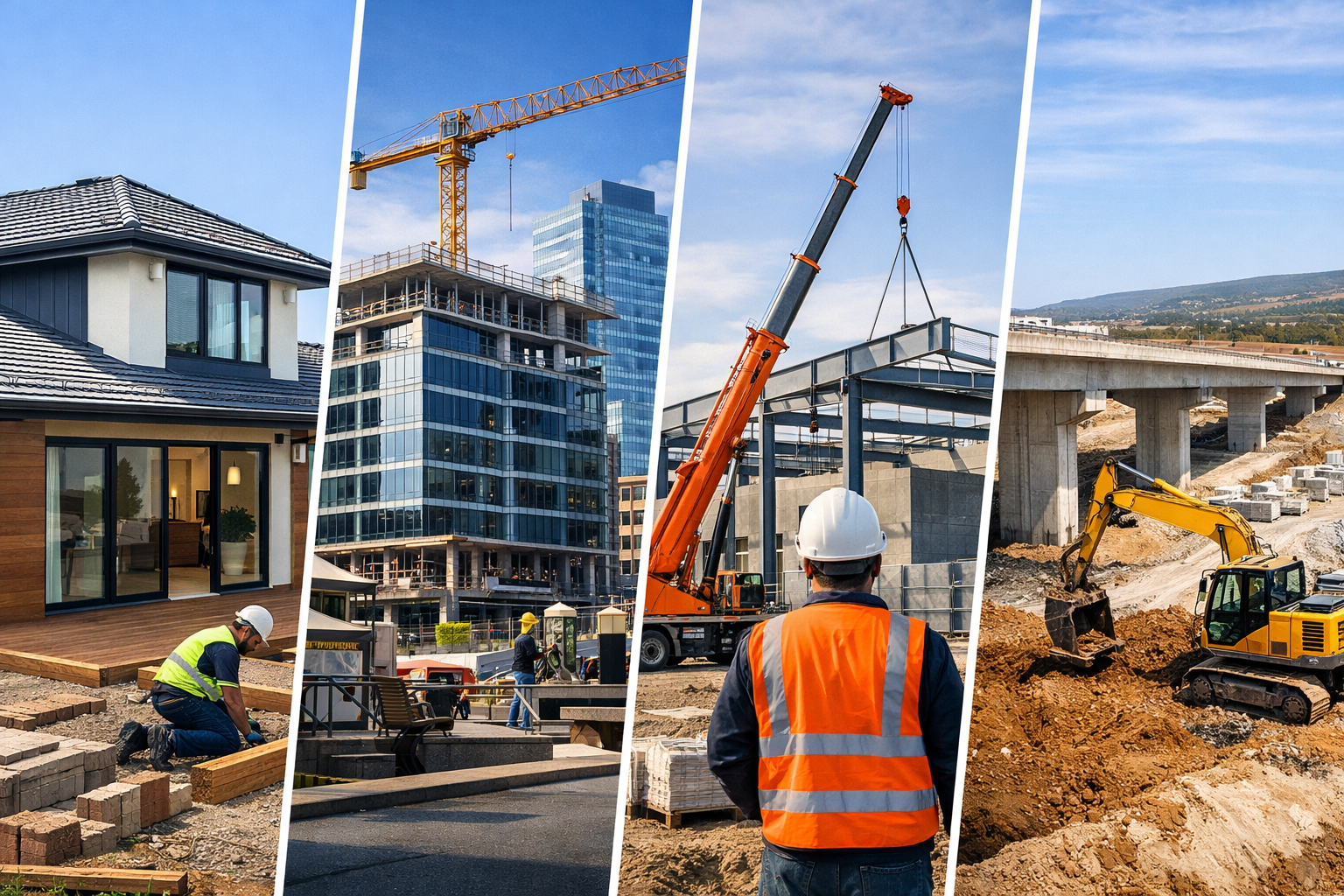
When people talk about construction types, they're usually referring to these four categories: residential, commercial, industrial, and infrastructure. Yeah, there are other ways to classify buildings... fire ratings, material types, all that stuff. But for practical purposes, especially if you're building anywhere in Canberra, these four are what you need to know.
1. Residential Construction: Where People Actually Live
This is your house, townhouse, apartment, and granny flat. Basically, anywhere someone calls home.
Residential construction in Canberra is... interesting. We've got heritage areas in Barton and Forrest where you can't just knock down and rebuild whatever you want. Then you've got brand new suburbs like Denman Prospect, where entire neighbourhoods are going up from scratch. The rules change depending on where you are, which is fun. (It's not fun. It's genuinely confusing sometimes.)
Also Read: What Are the Setbacks for Building in Canberra?
What Makes Residential Different
Residential builds focus on livability. Comfort. Making sure you can actually live there without going mad. That means things like proper insulation (which matters more than you'd think in Canberra's freezing winters), good natural light, and layouts that make sense for daily life.
The regulations are pretty strict, too. In the ACT, you're dealing with the National Construction Code, energy efficiency standards that are getting tougher every year, and bushfire regulations if you're building in certain areas. Fun fact: Canberra's energy efficiency requirements are some of the strictest in Australia. Your builder needs to know this stuff inside and out.
Single-family homes are still the most common residential projects. But we're seeing way more townhouses and apartment complexes lately, especially in areas like Gungahlin and Belconnen. The construction techniques for multi-unit buildings are different... more complex, more regulations, different materials.
2. Commercial Construction: Shops, Offices, and Everything In Between
Commercial construction is where businesses operate. Your local café in Braddon, those new office buildings in the city, shopping centres, restaurants, and hotels. If money gets exchanged there regularly, it's probably commercial construction.
Here's where it gets more complicated than residential. Commercial buildings need to handle more people, comply with accessibility standards, and often need specific features depending on what business goes there. A restaurant needs a completely different infrastructure than an office building.
Why Commercial Projects Take Longer
Commercial builds in Canberra face extra layers of approval. You're dealing with the ACT planning authority, compliance certificates, and sometimes heritage considerations if you're working near older buildings. And the standards are higher... commercial buildings need to handle heavier foot traffic, meet fire safety requirements for public spaces, and comply with disability access laws.
The timeline for commercial construction is usually longer than residential. Not because builders are slower, but because there's just... more. More approvals, more inspections, more regulations. A simple fitout in Civic can take months just to get through planning.
3. Industrial Construction: The Stuff Most People Don't Think About
Industrial construction includes factories, warehouses, processing plants, and distribution centres. The buildings where things get made, stored, or processed before they reach you.
In Canberra, we don't have as much heavy industrial construction as other cities. We're not exactly a manufacturing hub. But we do have warehouses, logistics centres, and light industrial facilities, especially out in areas like Hume and Fyshwick.
What Makes Industrial Construction Different
Industrial buildings are all about function over form. They need to be durable, efficient, and safe for workers. That usually means large open spaces, heavy-duty materials, specialised ventilation or power systems, and compliance with workplace safety regulations.
The construction materials are different, too. Lots of steel and concrete. Pre-engineered metal buildings are common because they're cost-effective and quick to put up. You're not worrying about fancy finishes here... you're worrying about whether the building can handle the equipment and processes that'll happen inside.
For Canberra specifically, industrial projects often need environmental impact assessments. The ACT government takes sustainability seriously (maybe more seriously than some other places), so even warehouse construction needs to consider things like stormwater management and energy efficiency.
4. Infrastructure Construction: The Backbone Nobody Notices Until It Breaks
Infrastructure includes roads, bridges, tunnels, railways, water systems, and power lines. All the stuff that keeps a city actually functioning.
This is probably the type of construction that affects your daily life the most, even if you never think about it. Every time you drive to work, turn on a tap, or flush a toilet, you're using infrastructure that someone built.
Why Infrastructure Projects Are So Complicated
Infrastructure construction in Canberra involves multiple government agencies, massive budgets, and timelines measured in years (sometimes decades). Think about the light rail project... that was infrastructure construction, and it took years of planning before anyone even broke ground.
These projects need specialised contractors, extensive engineering, and coordination with existing systems. You can't just build a new road without thinking about drainage, traffic flow, connections to other roads, environmental impact, and about fifty other things.
The ACT government manages most infrastructure projects directly, but private contractors actually do the construction work. It's a partnership that requires serious project management skills and experience dealing with government processes.
Read More: 7 Stages of Construction
How Virk Construction Management Can Help
Look, understanding construction types is one thing. Actually managing a construction project in Canberra? That's something else entirely.
Virk Construction Management has been navigating ACT building regulations and managing projects across all construction types for years. Whether you're planning a residential renovation, a commercial fitout, or something more complex, having someone who actually knows the local landscape makes a massive difference.
We get it. The approval processes in Canberra can be frustrating. The regulations change. The timelines blow out. But working with a construction management team that's done this before, that knows which approvals you actually need and which inspectors will care about what... it saves you time, money, and a whole lot of stress.
Our team handles everything from initial planning and budgeting through to final inspections. We work with builders, architects, and the ACT planning authority to keep your project moving. No surprises, no runaround, just straightforward construction management that gets results.
Why This Actually Matters for Your Project
Here's the thing nobody tells you upfront: the type of construction determines almost everything else about your project.
It determines which regulations apply. A residential renovation follows different rules from a commercial fitout, which follows different rules from industrial construction. Get this wrong at the planning stage, and you're looking at delays, extra costs, and major headaches.
It determines your budget. Commercial construction costs more per square metre than residential construction, generally. Industrial projects have different cost structures altogether. You need realistic numbers based on the actual type of construction you're planning.
It determines your timeline. Infrastructure projects take years. Residential builds take months. Commercial projects fall somewhere in between, depending on size and complexity.
And it determines who you need on your team. Different construction types need different specialists. You wouldn't hire a residential builder for an industrial warehouse. You wouldn't use an infrastructure contractor for a house renovation.
Getting Started: What You Actually Need to Know
If you're planning a construction project in Canberra, start by figuring out which type you're dealing with. Sounds obvious, but you'd be surprised how many people jump straight into design without considering the regulatory implications.
Once you know your construction type, you can start asking the right questions. What approvals do I need? What's a realistic timeline? What should this actually cost? Who are the right professionals to bring on board?
The ACT government's planning website has information on regulations and requirements, but honestly? It's dense. Really dense. Sometimes you just need someone to translate it into normal language and tell you what actually applies to your specific project.
That's where proper construction management comes in. Not just someone to oversee the build, but someone who understands the planning side, the regulatory side, and how to navigate the ACT's specific requirements without losing your mind.
Final Thoughts
Construction types aren't just categories. They're frameworks that determine how your entire project unfolds. Understanding them from the start saves you from expensive mistakes and frustrating delays down the track.
And look, if you're feeling overwhelmed by all this... that's normal. Construction projects are complicated. That's why construction management exists as a profession. You don't need to become an expert in ACT building regulations or construction types. You just need to work with people who already are.
Whether you're building a home, opening a business, or tackling something bigger, knowing what type of construction you're dealing with is the first step toward actually getting it done right.