
7 Modern Office Design Ideas for Canberra Businesses in 2026
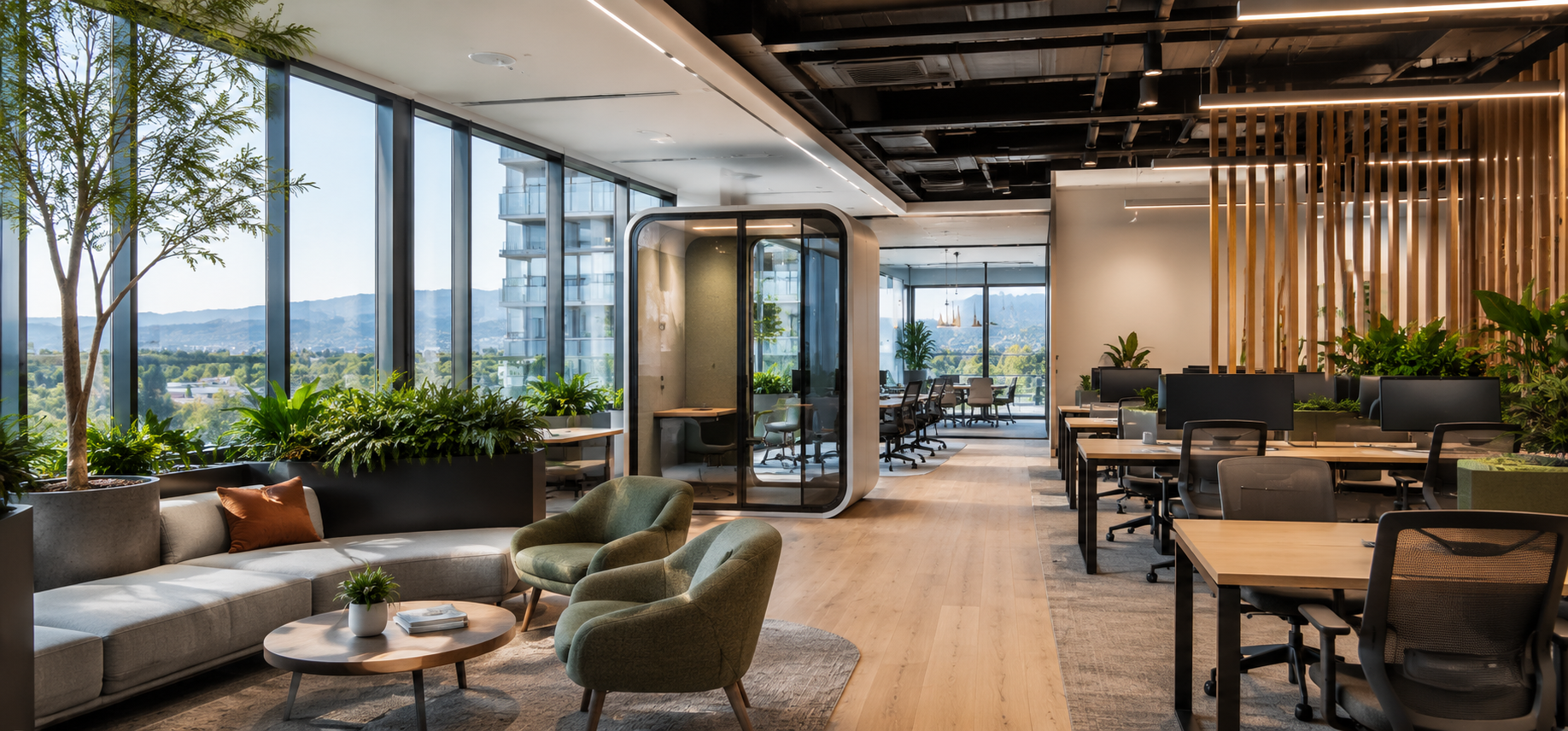
Canberra's commercial market is shifting fast. Hybrid work patterns, rising energy costs, and a growing pool of national and government tenants in precincts like Civic, Barton, Braddon, and Kingston Foreshore mean that office design is no longer a back-of-mind decision. It is a direct factor in whether a business attracts talent, retains staff, and runs an efficient workplace through the ACT's cold winters and dry summers.
This guide covers seven office design ideas that are gaining traction across workplaces in Canberra as we head into 2026. Each one looks at the practical reasoning behind the trend, not just the visual appeal, so you can decide what genuinely suits your space and your team.
Why Office Design Matters for Canberra Businesses in 2026
Office space in Canberra carries a few local pressures that do not apply everywhere in Australia. Many commercial buildings sit close to heritage areas, which means fitout approvals often involve NCA (National Capital Authority) sign-off in addition to standard ACT building certification. Winters bring extended heating costs, and a large share of the local workforce comes from government and public sector backgrounds, where expectations around workplace comfort and accessibility tend to be high.
Good design responds to all of this. It is not about following a trend for its own sake. A well-planned office reduces energy spend, supports staff wellbeing, and creates a space that reflects the standard of work happening inside it. If you are weighing up a renovation or a full fitout, it helps to understand the scope of construction management before locking in a design direction, since the planning stage shapes everything that follows.
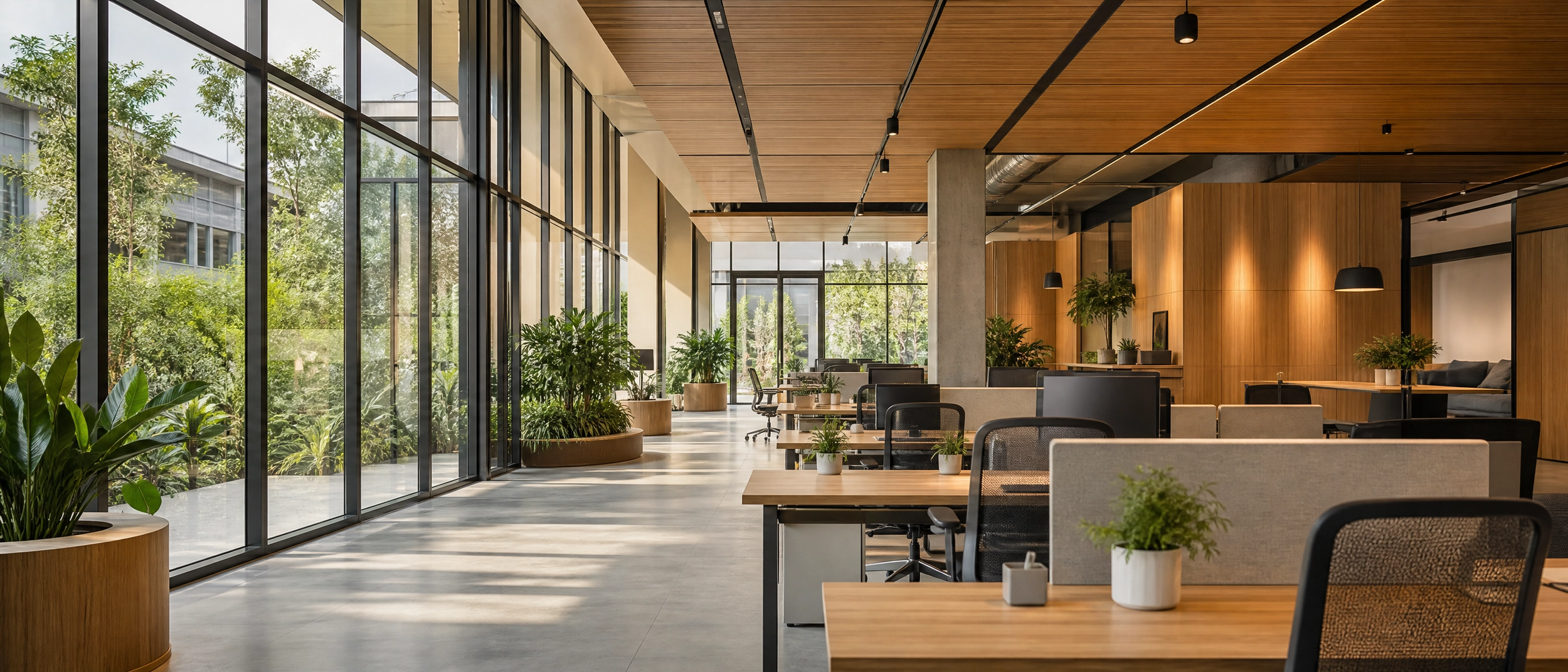
1. Biophilic Design with Native Australian Plantings
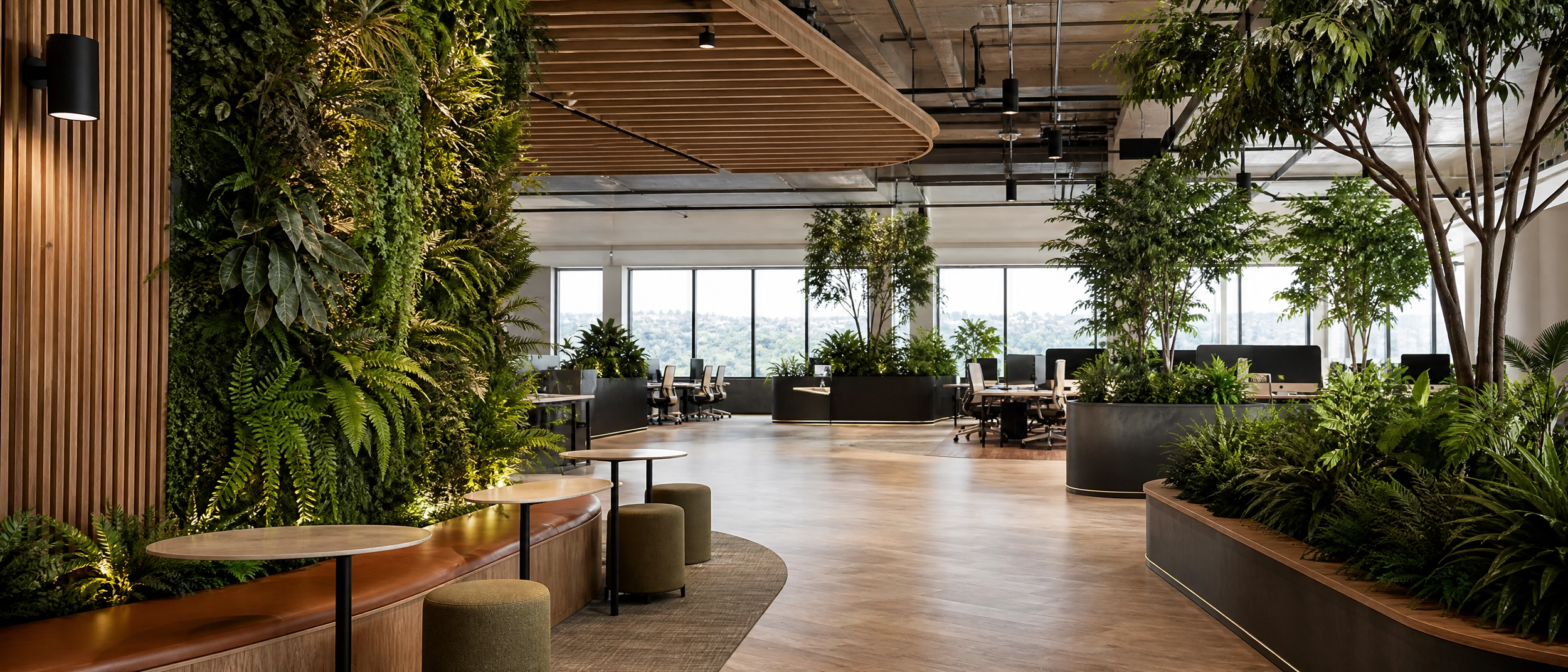
Biophilic design brings natural elements indoors through plants, natural light, timber finishes, and views of greenery. In Canberra, this works particularly well because the city sits close to bushland and nature reserves, so the aesthetic feels consistent with the surrounding environment rather than imported from elsewhere.
Practical features businesses are adopting include the following.
Indoor planting using hardy native species such as kangaroo paw and lomandra that tolerate indoor light conditions
Living walls positioned near entry points or breakout zones
Timber and stone finishes that echo the Brindabella ranges and local landscape
Window placement and glazing that maximises views of outdoor greenery
Studies on workplace wellbeing consistently link exposure to natural elements with lower reported stress and improved concentration, which makes this one of the higher value design choices for offices that run long, desk-heavy workdays.
2. Activity-Based Working Zones
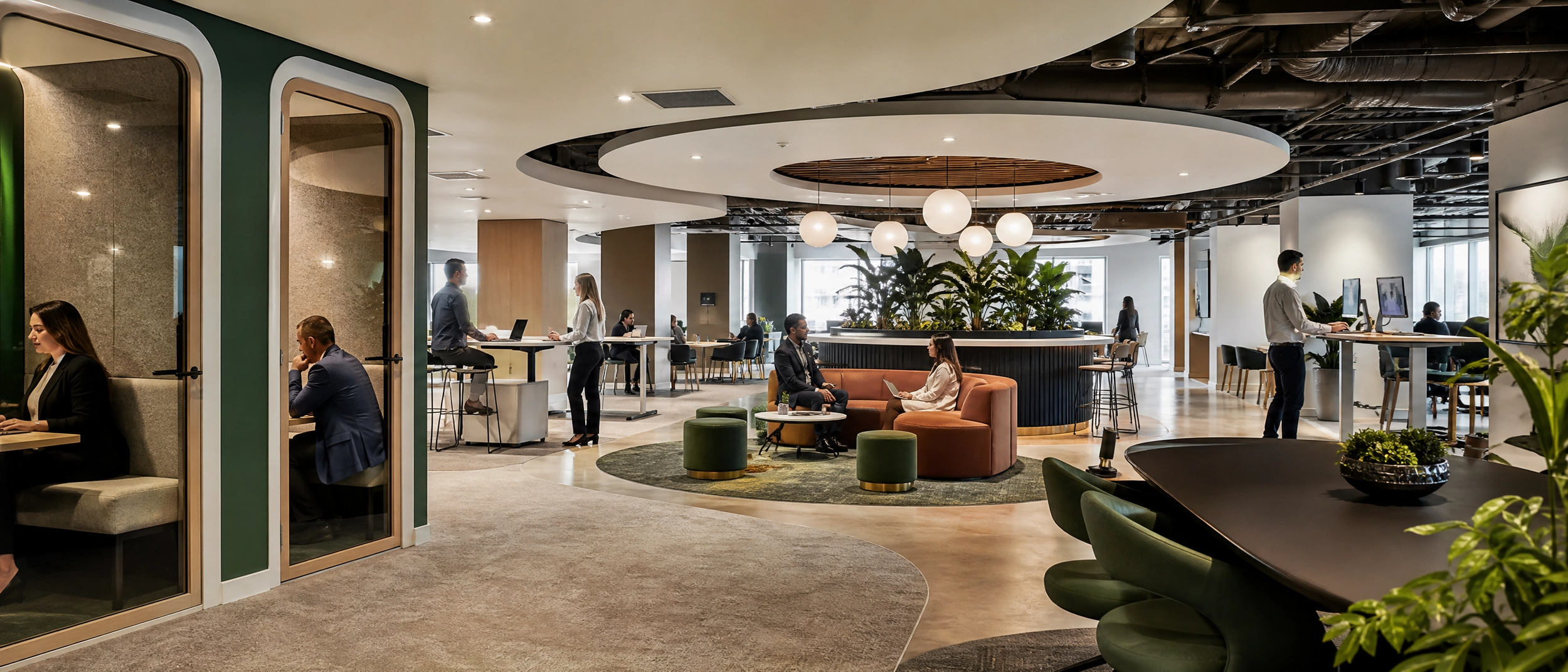
Fixed desks for every employee are becoming less common as hybrid work settles into a permanent pattern. Activity-based working assigns different zones for different tasks rather than one desk per person.
A typical activity-based layout includes:
Quiet focus zones for individual deep work
Open collaboration tables for team projects
Standing meeting points for quick conversations
Bookable private offices for calls or sensitive discussions
This model suits Canberra businesses with rotating in-office attendance, since it makes better use of floor space than a traditional desk-per-head arrangement. It also reduces the square metreage a business needs to lease, which has a direct effect on rent in tighter commercial markets like Civic and the Kingston Foreshore precinct.
3. Acoustic Engineered Collaboration Pods
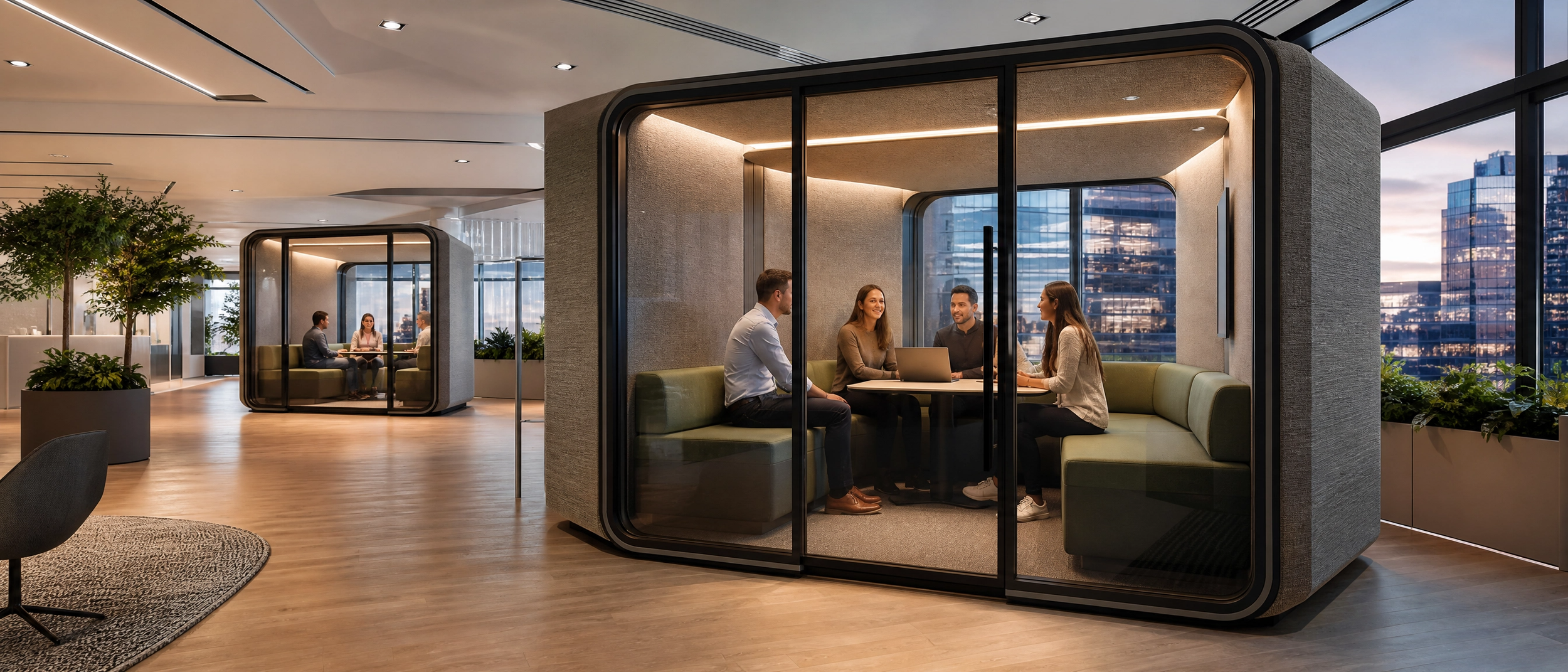
Open plan offices solved one problem and created another. Noise. Acoustic pods address this directly by giving staff a soundproofed space for calls, video meetings, or focused work without needing a separate enclosed office.
Key considerations for acoustic pods include:
Sound rating measured in decibel reduction, with most commercial pods reducing noise by 25 to 30 decibels
Ventilation and airflow, since enclosed pods need mechanical ventilation to remain comfortable for extended use
Placement away from load-bearing walls where possible, to simplify installation
Power and data access built into the pod base rather than run externally
For businesses operating in older Canberra commercial buildings with heritage constraints, freestanding acoustic pods are often a more practical solution than permanent partition walls, since they do not require structural alteration or additional approvals in most cases.
4. Passive Design and Energy Efficient Lighting
Canberra has one of the more extreme climates among Australian capital cities, with cold winters and hot, dry summers. Office lighting and passive design choices have a measurable effect on running costs across that range.
Approaches gaining ground in 2026 include:
LED lighting systems paired with daylight sensors that dim artificial light when natural light is sufficient
North-facing glazing with external shading to manage solar gain without blocking natural light
Double-glazed windows to reduce heat loss during Canberra winters
Zoned lighting controls so unused areas of an office are not lit unnecessarily
These choices align with the sustainability focus already shaping commercial fitouts across the region, where energy efficiency and environmentally friendly materials are increasingly part of the brief rather than an afterthought.
5. Flexible Modular Partitioning
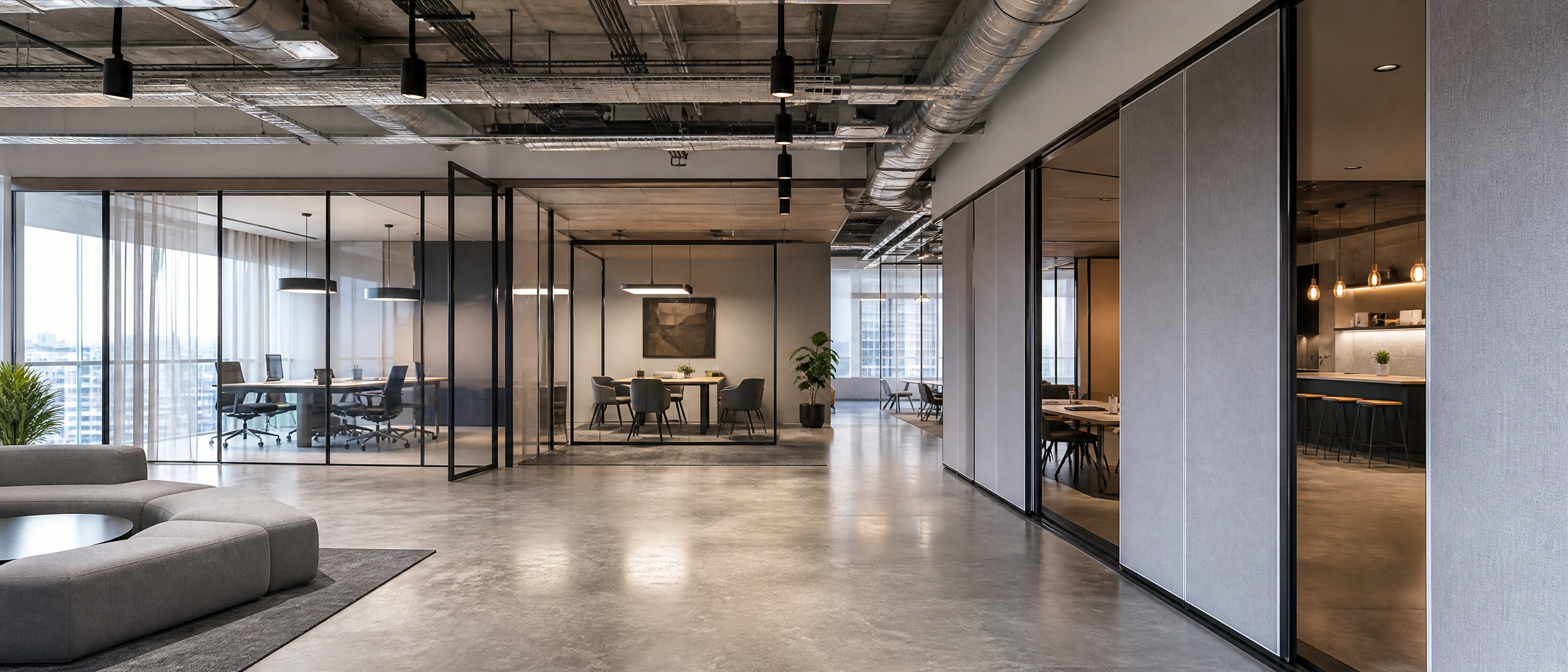
Static walls limit a business as it grows or changes structure. Modular partitioning systems allow an office to be reconfigured without a full renovation, which matters for Canberra businesses dealing with lease cycles, staff growth, or shifting team structures.
Common modular partition options include:
Demountable glass walls that can be relocated without demolition
Sliding acoustic panels for meeting rooms that double as open space
Freestanding screen systems for quick zone changes
Track-based wall systems that allow full room reconfiguration in a single day
This approach also reduces waste during future office changes, since panels are reused rather than demolished and replaced. For a business weighing up a full commercial fitout, modular partitioning is worth discussing early, as it affects how the rest of the layout is planned.
6. Wellness Focused Amenities
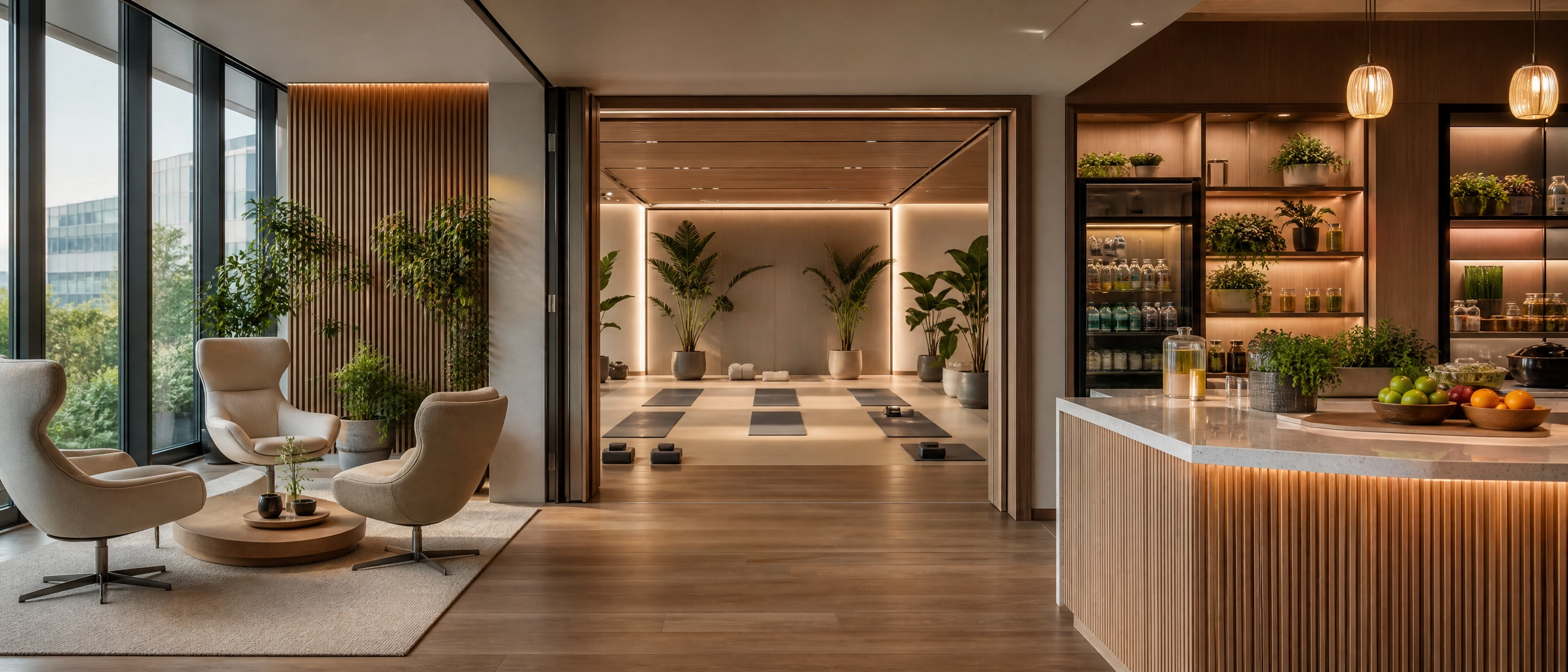
Employee wellbeing has moved from a nice-to-have to an expected feature in office design. This goes beyond a single breakout room and into how the entire floor plan supports staff during the working day.
Wellness features showing up in newer Canberra fitouts include:
End of trip facilities including secure bike storage, showers, and lockers
Quiet rooms separate from acoustic pods, intended for rest rather than work
Height adjustable desks to reduce strain across long sitting periods
Kitchen and breakout areas positioned away from high-traffic walkways to encourage genuine breaks
Businesses competing for staff in a tight Canberra labour market, particularly in professional services and technology, are finding that these features influence hiring decisions as much as salary in some cases.
7. Smart Technology Integration
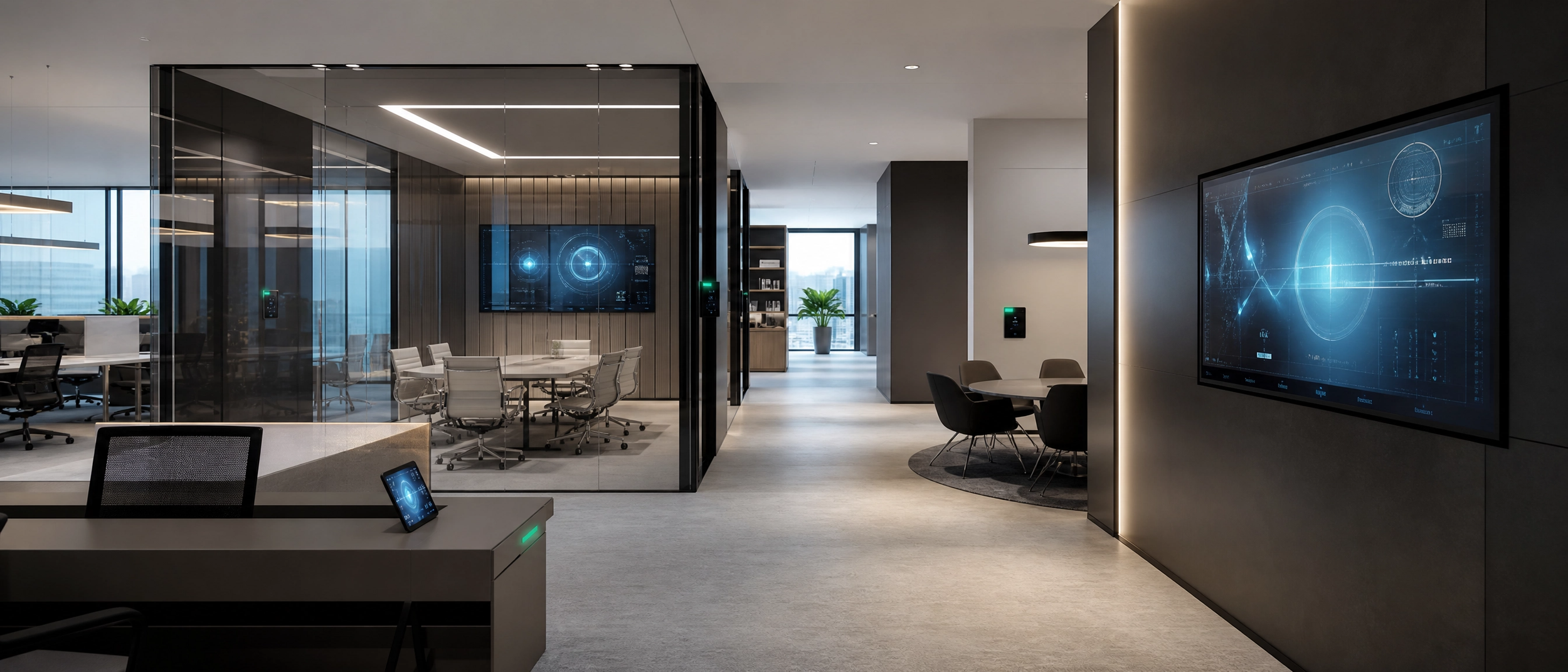
Smart office technology covers a wide range of tools, but the most practical applications for small and mid-sized Canberra businesses tend to be straightforward rather than elaborate.
Useful and accessible technology integrations include:
Desk and room booking systems linked to occupancy sensors, reducing wasted space in hybrid offices
Automated climate control that adjusts heating and cooling by zone and time of day
Access control systems that simplify after-hours entry without a full reception presence
Energy monitoring dashboards that track usage by floor or department
This kind of integration ties into a broader shift already visible across the construction sector, where AI and digital tools are helping project teams identify issues earlier and improve outcomes across both build and post-occupancy stages.
Comparing the Seven Design Ideas
| Design Idea | Primary Benefit | Typical Investment Level | Best Suited For |
|---|---|---|---|
| Biophilic design | Staff wellbeing and concentration | Low to medium | All office sizes |
| Activity based working | Space efficiency | Medium | Hybrid teams |
| Acoustic pods | Noise control and privacy | Medium to high | Open plan offices |
| Passive design and lighting | Lower running costs | Medium | Long term leases |
| Modular partitioning | Long term flexibility | Medium to high | Growing businesses |
| Wellness amenities | Staff retention | Low to medium | Talent competitive sectors |
| Smart technology | Operational efficiency | Medium | Hybrid and multi-floor offices |
Choosing the Right Approach for Your Canberra Office
Not every business needs all seven ideas at once. A small professional services firm leasing a single floor in Barton has different priorities to a larger organisation managing multiple departments across a Civic building. The right starting point is usually an honest look at your current pain points, whether that is noise, energy costs, staff turnover, or simply outgrowing your floor plan.
It also helps to understand how the local market approaches these projects before committing to a direction. A review of fitout construction companies operating across Canberra and the ACT shows that transparency around cost and process tends to separate reliable contractors from the rest, particularly when a project involves heritage approvals or staged construction around an operating business.
Final Thoughts
Office design in Canberra is moving toward spaces that are genuinely functional rather than purely decorative. Biophilic elements, activity-based zones, acoustic privacy, passive energy design, modular flexibility, wellness amenities, and smart technology all solve real problems that Canberra businesses face day to day, from winter heating costs to staff retention in a competitive market.
The businesses getting the most value from their office space in 2026 are the ones treating design as a long-term investment rather than a one-off renovation. Planning around growth, energy costs, and staff needs from the outset avoids costly rework later.