
Is OPC or PPC Better for Plaster?


Published by Adeel Virk
Adeel is a founder & project manager at Virk Construction Management, delivering ethical, high-quality residential and commercial projects in NSW and Canberra.
If you have ever watched a plasterer work, you know there is a certain rhythm to it: the mix, the application, the smoothing. But before any of that happens, there is a decision that quietly shapes everything: which cement do you use? Ordinary Portland Cement (OPC) or Portland Pozzolana Cement (PPC)?
This question comes up more often than you would expect, especially on residential and commercial builds across Canberra, New South Wales, and the ACT. And honestly, the answer is not as simple as most people think. Both cements have real merit. Both have drawbacks. The right choice depends on what you are plastering, where you are, and what you expect the wall to look like in five years.
Let us break this down properly.
What Are These Two Cements, Anyway?
Ordinary Portland Cement (OPC)
OPC is the classic. It has been around since the 1800s and is made primarily from limestone, clay, and gypsum. It is the go-to cement for a large portion of the construction industry, known for its high early strength and fast setting time. When people think of cement, they are usually thinking of OPC. It gains strength quickly, which sounds like a good thing. But in plastering, fast is not always better.
Portland Pozzolana Cement (PPC)
PPC is OPC with something extra: fly ash (a byproduct of burning coal in power plants) or natural pozzolana. This addition changes the chemistry of how the cement hydrates. PPC takes longer to set, but it continues gaining strength over a longer period. It is also less prone to cracking and tends to produce a smoother, more workable plaster mix.
For independent technical guidance on cement standards used across Australian construction, the Cement Concrete and Aggregates Australia (CCAA) resource library is a reliable starting point.
Get Advice Tailored to Your Project
Speak with Virk Construction Management today. You get guidance based on your site conditions, budget limits, and project goals.
Get Project AdviceOPC vs PPC: A Direct Comparison
Here is a side-by-side breakdown of how these two cements perform in the context of plastering:
| Property | OPC (Ordinary Portland Cement) | PPC (Portland Pozzolana Cement) |
|---|---|---|
| Composition | Clinker and gypsum | Clinker, gypsum, and pozzolanic materials (fly ash) |
| Initial Strength Gain | High and fast | Moderate and slower |
| Long-Term Strength | Good | Better over time |
| Heat of Hydration | Higher | Lower |
| Durability | Moderate | Higher resistance to chemicals and moisture |
| Workability | Lower | Better and smoother mix |
| Crack Resistance | Higher risk | Lower risk |
| Best Applications | High-strength structural work, early formwork removal | Mass concrete, marine structures, plastering |
| Environmental Impact | Higher carbon footprint | More eco-friendly due to fly ash usage |
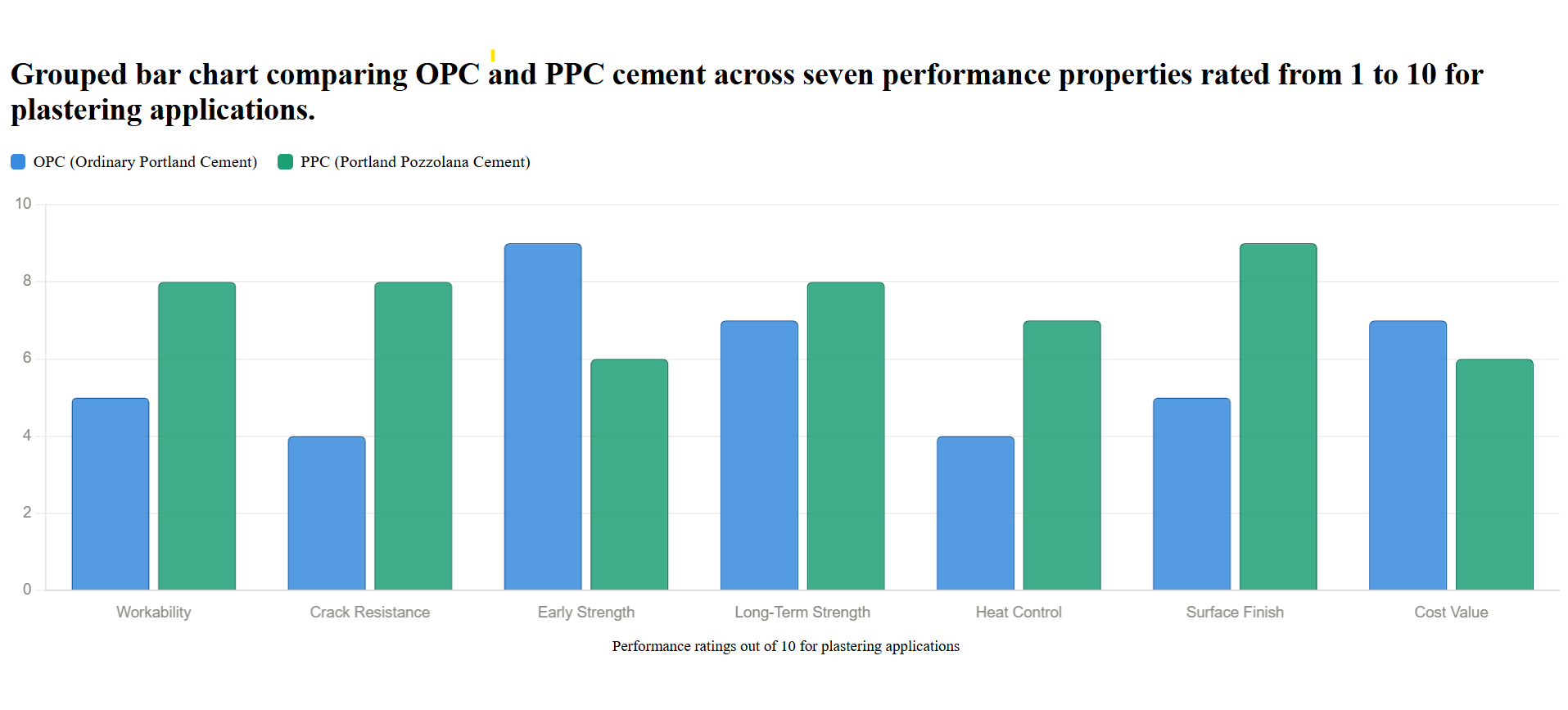
The numbers tell part of the story. But the real picture is more nuanced.
Workability: Why It Matters More in Plastering Than You Think
When you are doing structural concrete, workability matters, but it is not the primary concern. Strength is. In plastering, workability is everything. A mix that is too stiff creates trowel drag. One that is too wet slumps and runs. Getting it right is an art.
PPC wins here. The finer particle size and the pozzolanic reaction create a creamier, more cohesive mix. Plasterers who have worked with both will tell you that PPC spreads more evenly, adheres better to substrates, and gives a cleaner finish on the first pass. OPC can be made workable, but it requires more water or more plasticiser, which then creates its own problems.
Not Sure Which OPC Grade to Choose?
Learn how different OPC grades impact strength, durability, and cost. Get clear guidance before selecting the right option for your project.
Read the Full GuideStrength and Setting Time: OPC Has the Edge, But Is It Useful Here?
OPC reaches about 70 percent of its final strength within seven days. That sounds impressive, and in concrete it is. But in plaster, high early strength can actually work against you. Here is why.
Plaster shrinks as it dries. If the cement gains strength too quickly, the layer becomes rigid before the shrinkage has run its course. That leads to surface cracking, especially in hot and dry climates like Canberra, where temperature swings are genuine and significant.
PPC is more forgiving. It cures more slowly, which allows the plaster to dry and shrink more uniformly before the matrix locks in. The result is a finish with fewer hairline cracks and a longer service life.
That said, if a project is on a tight schedule and you need a plaster coat to cure fast, OPC has its advantages. Just be prepared to manage the curing process carefully with consistent misting and controlled ventilation.
Cracking and Shrinkage: The Core Issue
This is where the debate really settles. Ask any experienced plasterer about their biggest challenge, and cracking will be near the top of the list.
Plaster cracks can result from:
Too much water in the mix
Rapid drying in hot or windy conditions
Applying the coat too thick in one pass
Using the wrong cement type for the substrate
Poorly prepared or contaminated backgrounds
OPC's high heat of hydration contributes to faster evaporation of moisture from the plaster layer. On a hot Canberra summer day, that can spell trouble. The surface dries before the body of the plaster, leading to surface shrinkage cracks that run right through to the finished coat.
PPC generates less heat during hydration. Combined with its slower setting time, this means the entire plaster layer has more time to dry uniformly, inside and out. The result is a more stable, less crack-prone surface, particularly on exposed external walls in ACT conditions.
If you are working on a project in Canberra or the ACT and want to understand how material choice affects finish quality, the team at Virk Construction Management brings hands-on experience with these exact decisions on local projects.
Cost: Is There Really a Difference?
| Cost Factor | OPC | PPC |
|---|---|---|
| Upfront cost per bag | Lower | Slightly higher |
| Water and additive usage | Higher | Lower |
| Remediation risk over 10 years | Higher | Lower |
| Overall lifecycle value | Moderate | Better |
In the short term, OPC is generally slightly cheaper per bag. PPC runs a little higher, partly because of the processing involved and the added pozzolanic materials.
But the real cost conversation is about the long term. If a PPC plaster job holds up for 20 years without major maintenance, and an OPC job requires remediation in seven, the initial saving becomes irrelevant. For large-scale residential or commercial projects across NSW and the ACT, this lifecycle cost argument becomes very significant.
What Builders in Canberra and NSW Actually Choose
The shift in professional preference has been noticeable over the past decade. More and more builders and finishing contractors across the ACT and NSW are defaulting to PPC for internal and external plaster work. The reasons are practical:
Better compatibility with lime additives common in heritage and period-style work
More forgiving on hot project days in the Canberra basin
Reduced call-backs from clients reporting hairline cracking
A smoother finish that requires less sanding and rework
Greater consistency when working with different substrate types
OPC still has a loyal following, especially for quick-turnaround projects and situations where a hard substrate is needed quickly. Some contractors also use OPC for the base scratch coat and PPC for the finish coat, which is a reasonable hybrid approach that combines the strengths of both materials.
Common Mistakes When Mixing Cement for Plaster
Regardless of which cement you choose, errors in mixing can undermine even the best material selection. These are the ones that come up most often on site:
Too much water: Increases workability in the short term but weakens the final product and significantly increases the risk of shrinkage.
Ignoring the substrate: A highly absorbent surface like old brick will draw water out of the plaster too fast, regardless of cement type. Wetting the surface before application is basic but often skipped.
Inconsistent mixing: Dry clumps in the mix lead to weak spots and uneven texture in the finished plaster.
Applying thick single coats: Plaster should go on in layers. Trying to build up 20mm in one pass is a reliable way to cause cracking.
Rushing the second coat: Applying a finish coat over a still-fresh base coat is one of the most common causes of delamination on both residential and commercial projects.
For more practical guidance on construction best practices in the ACT and NSW, visit the Virk Construction Management blog.
Final Verdict: Which One Actually Wins?
For most plastering applications, PPC is the better choice. It is more workable, less prone to cracking, and produces a more consistent and refined finish. The slightly higher upfront cost is justified by improved performance and reduced maintenance over the life of the building.
OPC has a clear place in construction, particularly in structural applications or where fast setting is genuinely required. But as a general-purpose plastering cement, especially in a climate like Canberra where summer heat and temperature variation are real factors, PPC holds up better over time.
The answer is not universal, but if you had to pick one for a plastering project and you wanted to minimise problems down the track, PPC is the smarter bet for almost every situation.
Work With a Team That Knows the Difference
Choosing the right cement is just one piece of the puzzle. The quality of the application, the experience of the team, and the understanding of local conditions all shape the final result.
Virk Construction Management works with residential and commercial clients across Canberra, New South Wales, and the ACT. Whether you are planning a new build, a renovation, or a commercial fit-out, the team brings practical, on-the-ground knowledge to every stage of the project, including material selection decisions that others overlook.
Meta Description: Wondering whether OPC or PPC is better for plaster? This detailed guide compares workability, crack resistance, strength, and cost so builders and homeowners across Canberra, NSW, and ACT can make a confident, informed choice.