
What Does LFT Mean in Construction? A Complete Guide

Published by Adeel Virk
Adeel is a founder & project manager at Virk Construction Management, delivering ethical, high-quality residential and commercial projects in NSW and Canberra.
If you have ever received a construction quote and stared at the abbreviation "LFT," wondering what on earth it means, you are not alone. Construction documents are full of shorthand that makes perfect sense to a builder and absolutely none to anyone else on first read. LFT is one of those terms that appears across quotes, invoices, and material specifications daily, yet most homeowners and property developers in Canberra, NSW, and ACT have never had it properly explained to them.
This guide breaks down exactly what LFT means, where it gets used on real projects, how it differs from other measurement units, and why understanding it will help you read your next construction quote with far more confidence.
What Does LFT Mean in Construction?
LFT stands for linear foot, sometimes also written as "lineal foot." One linear foot is simply one foot of length measured along a straight line, which equals approximately 30.48 centimetres. Unlike square feet (which measure area) or cubic feet (which measure volume), a linear foot measures only length along a single dimension.
The term is used when a material is sold, quoted, or installed based purely on its length, regardless of how wide or thick it happens to be. When a builder quotes you 40 LFT of benchtop, they are telling you the benchtop runs 40 feet in total length. The width of the benchtop is a separate consideration that is usually already factored into the per-unit rate.
Linear Foot vs Lineal Foot: Is There a Difference?
Technically, no. "Linear foot" and "lineal foot" refer to the same unit of measurement and are used interchangeably across the Australian construction industry. Some trades prefer one spelling over the other, but on a quote or invoice, they mean the same thing. You may also see it abbreviated as LF, Lin Ft, or written out in full. All four variations refer to one foot of length.
Looking for Clearer Construction Pricing and Better Project Management?
Get in touch through the contact page or explore the full range of construction services offered by Virk Construction Management. You receive transparent pricing, practical project guidance, and support that helps your build stay on time, on budget, and free from unclear quotes or hidden surprises.
Transparent Pricing · Open Book Model · ACT & NSW Licensed
Why LFT Shows Up in Nearly Every Construction Quote?
Australia formally uses the metric system for construction, yet LFT remains widespread because so much of the industry's historical pricing, supply chain logistics and estimating software was built around imperial units. Many imported materials are manufactured and distributed in imperial dimensions, and a significant portion of trade knowledge was passed down through decades of practice using feet and inches.
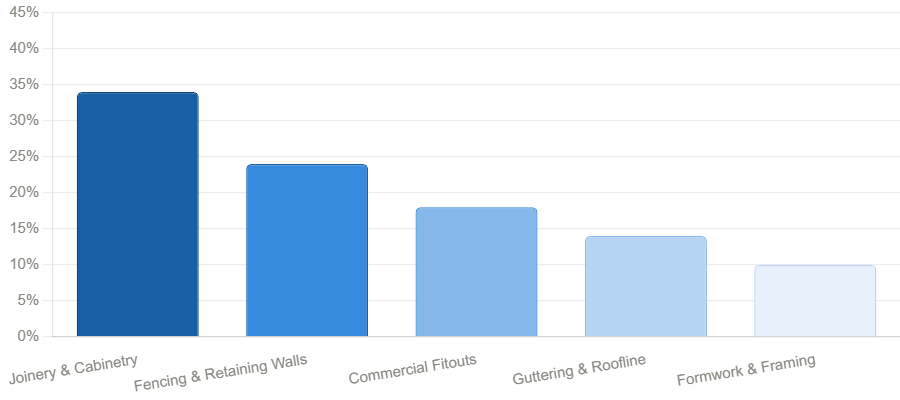
LFT is particularly common across:
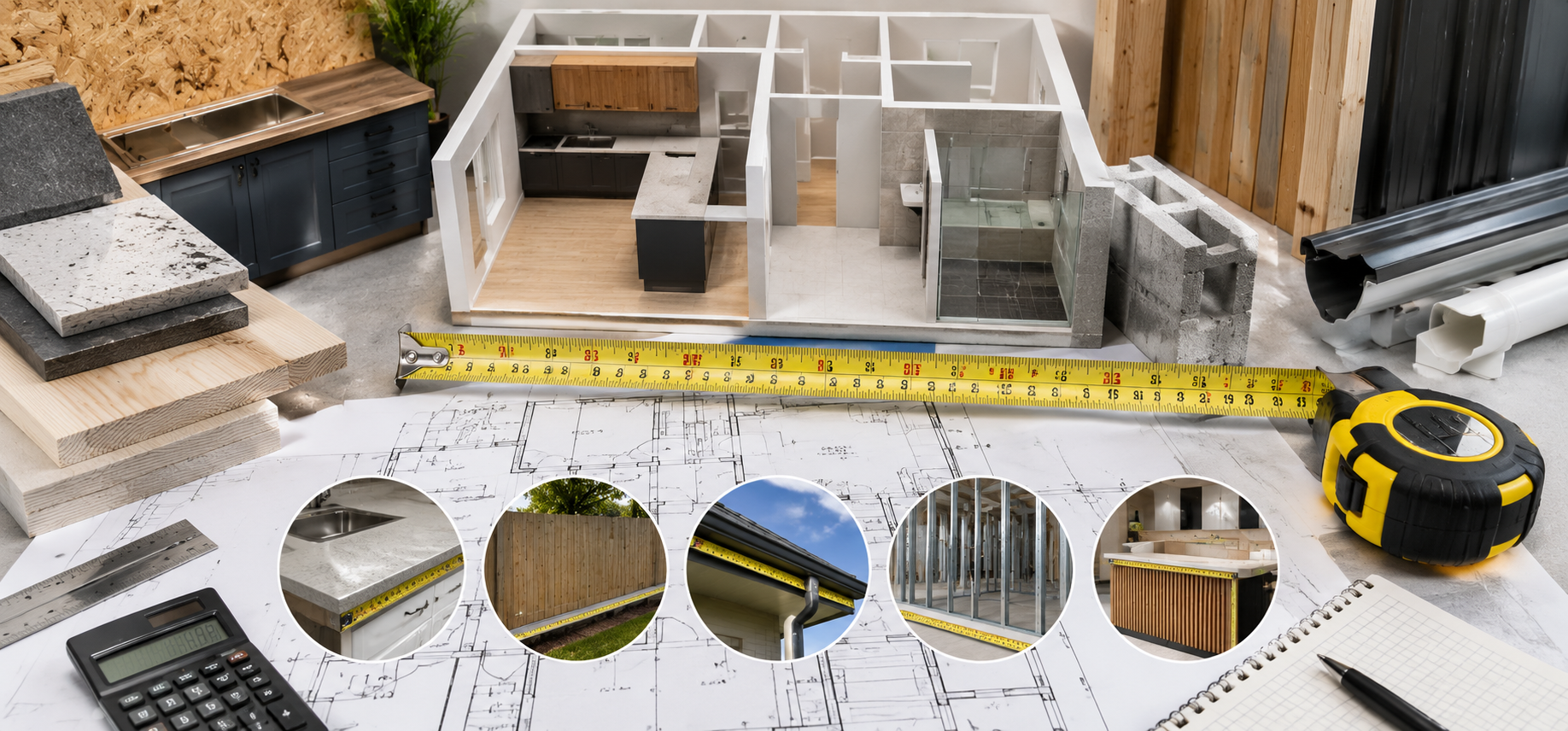
Joinery and cabinetry specifications
Fencing contracts and retaining wall installations
Guttering, fascia, and roofline quotations
Formwork and structural framing
Commercial fitout estimates for tenancies, offices, and retail spaces
The reason LFT persists is practical. For many materials, length is the primary driver of both material cost and installation labour. A cabinetmaker pricing a kitchen does not particularly care which house it goes into. What matters is how many feet of joinery they are building, cutting, and installing. That number determines how long the job takes and how much timber, hardware, and finishing material is consumed.
Where is LFT Is Used Across Different Construction Project Types?
Understanding where LFT appears in a project will help you cross-check quotes and ask the right questions before signing anything.
Joinery and Cabinetry
This is the most common place that homeowners in Canberra and NSW encounter LFT. Kitchen benchtops, overhead cabinets, bathroom vanities, wardrobes and laundry units are all typically quoted per linear foot. A builder will measure the run of cabinetry along each wall and total the lengths to arrive at an overall LFT figure.
If you are planning a kitchen renovation or a new build with custom joinery, checking the quoted LFT figure against your floor plan measurements is a straightforward way to verify accuracy before you sign. The home inclusions options at Virk Construction Management are designed and priced with full transparency, so each line item is clearly defined.
Fencing and Retaining Walls
Fencing quotes almost always express the total scope in LFT. A contractor quoting 120 LFT of timber fencing is describing the total perimeter run of the fence line. The same principle applies to retaining walls, garden borders, and feature walls, where length is the primary cost driver regardless of height or material profile.
Guttering, Fascia, and Roofline Work
Roofing and external cladding contractors quote guttering, fascia boards, barge boards, and downpipe connections in linear feet. If you are obtaining quotes for roofline work, the LFT figure should closely correspond to the measured perimeter of your roof. You can explore external cladding and roofline work in detail on the Virk Construction Management cladding options page.
Commercial Fitouts
Commercial fitouts for offices, cafes, retail spaces, and medical suites make heavy use of LFT-based pricing. Service counters, display shelving runs, partition tracks, ceiling bulkheads, and floor trims are all measured and quoted by length. For ACT and NSW business owners, understanding LFT in the context of a fitout estimate helps you engage meaningfully with design changes and avoid variation surprises mid-project.
LFT vs Other Construction Measurement Units
Here is a direct comparison of the most common measurement units that appear on construction quotes and invoices in Australia:
| Unit | Abbreviation | What It Measures | Typical Use in Construction |
|---|---|---|---|
| Linear Foot | LFT / LF | Length only (1 ft = 30.48 cm) | Joinery, fencing, guttering, trim |
| Square Foot | SFT / SF | Area (length × width) | Flooring, tiling, wall cladding |
| Cubic Foot | CFT / CF | Volume (length × width × height) | Concrete, excavation, fill material |
| Lineal Metre | LM | Metric length (1 m = 3.28 ft) | Structural steel, pipework, cabling |
| Square Metre | m² | Metric area | Rendering, painting, paving |
| Cubic Metre | m³ | Metric volume | Concrete pours, earthworks |
The key practical point is that switching between these units without understanding the difference can cause serious miscalculations. A quote for 50 SFT of flooring covers a small bathroom. A quote for 50 LFT of flooring tells you almost nothing on its own because flooring is an area product, not a length product. If you see LFT applied to a material that is normally quoted by area, that is worth questioning directly with your builder before you proceed.
How to Calculate Linear Feet Yourself?
Calculating linear feet is straightforward. Measure the total length of the run or item in metres, then multiply by 3.281 to convert to feet. Alternatively, divide the metric figure by 0.3048.
Here are a few quick examples that come up regularly on residential and commercial projects in Canberra and NSW:
A kitchen benchtop run of 6 metres equals approximately 19.7 LFT
A fence line of 30 metres equals approximately 98.4 LFT
A row of overhead cabinets 3.6 metres long equals approximately 11.8 LFT
A commercial service counter at 4.5 metres equals approximately 14.8 LFT
Being able to do this conversion yourself means you can open a quote, verify the LFT figures against your site measurements, and spot discrepancies before they become variations halfway through a build.
How LFT Affects Your Construction Budget and Quoting Accuracy?
The unit of measurement used in a quote has a direct impact on how the final cost is structured and how straightforward it is to verify. When a builder quotes by LFT, the total cost is a direct function of how many linear feet of material and labour are involved. If the design changes and the run gets longer or shorter, the cost adjusts proportionally and transparently.
This is exactly why accurate measurement at the quoting stage matters. A builder who measures carefully and quotes in LFT is giving you a figure you can independently verify. Loose or rounded LFT figures create room for variation claims once construction begins, and that is when projects in Canberra and NSW tend to go over budget.
The Cost Plus model offered by Virk Construction Management is built around this level of transparency. Every item is measured, documented, and priced so you know precisely what you are paying for and why. It is one of the most effective ways to eliminate the vague quantities that create budget blowouts on residential and commercial projects across the ACT region.
Common Mistakes Property Owners Make When Reviewing LFT Quotes
People unfamiliar with construction terminology tend to make the same errors when reviewing LFT-based quotes. Recognising these in advance will save you real money:
Confusing LFT with square footage: A quote for 40 LFT of benchtop is not the same as 40 square feet of benchtop. These are different dimensions entirely and should never be treated as interchangeable.
Skipping the metric conversion: If your drawings are in metres, convert before comparing. A quoted figure of 65 LFT is roughly 20 metres, which you can then check against your scaled plans.
Assuming LFT includes width or depth: A linear foot only measures length. If a per-LFT rate looks unusually low, check whether the width or profile of the material is already factored into the rate or whether it is being priced separately.
Comparing quotes that use different units: If one builder quotes in LFT and another quotes in LM (lineal metres), you must convert both to the same unit before comparing prices. Failing to do so can make one quote appear cheaper when it is actually quoting for less scope.
Not tying the LFT figure back to the drawings: Always ask for the LFT breakdown, room by room or element by element. A total LFT figure with no breakdown is almost impossible to verify and easy to inflate.
LFT in Commercial Fitouts: What Canberra and ACT Business Owners Should Know
Commercial fitouts in the Canberra, ACT, and NSW markets rely heavily on LFT-based pricing because the materials typically involved, such as service counters, partition framing, bulkhead tracks, and shopfitting joinery, are almost always manufactured and priced by the linear foot.
For a cafe or retail fitout, the service counter is often the single largest cost item on the fitout budget. Knowing that a counter is priced at a fixed rate per LFT allows you to adjust the design length in real time and understand exactly how each change affects the bottom line. A counter running 4.5 metres at a documented LFT rate gives you a precise, verifiable cost figure rather than a lump sum you have to take on trust.
If you are planning an office, cafe, or retail fitout in Canberra or the ACT, the commercial fitouts team at Virk Construction Management walks you through every line item in the estimate, including LFT-based costs, so there are no surprises once work begins on site. Browse the completed projects gallery to see recent office, retail, and cafe fitouts delivered across Canberra and regional NSW.
Work With a Builder Who Explains Every Line Item
Understanding what LFT means is genuinely useful knowledge for any property owner or business operator going through a construction project or commercial fitout. But terminology knowledge only goes so far. The other half of the equation is working with a builder who applies measurements accurately, documents them clearly, and explains them without making you feel like you should already know.
Virk Construction Management serves Canberra, ACT, and greater NSW with residential and commercial projects built on full cost transparency. Whether you are planning a new home, a kitchen renovation, a knockdown rebuild, or a commercial fitout, the team produces detailed, line-by-line estimates where every measurement is documented, justified, and open to review.