
What is Plumb vs Level? Understand the Basics

Published by Adeel Virk
Adeel is a founder & project manager at Virk Construction Management, delivering ethical, high-quality residential and commercial projects in NSW and Canberra.
So you are standing in your Canberra home, trying to hang a picture frame, and suddenly you are wondering if it is straight. Or maybe you are watching a construction crew work on a new build in your neighbourhood and hearing them throw around terms like "plumb" and "level" as everyone should just know what they mean.
Here is the thing: most people use these words interchangeably. They assume it all just means "straight." But if you are building something, renovating, or even just trying to understand why your doors are not closing properly, knowing the difference actually matters a lot.
The Simple Answer (Before We Get Into the Details)
Level means horizontal. Think of the ground beneath your feet or a tabletop. When something is level, it runs parallel to the horizon. Flat side to side.
Plumb means vertical. Think of a wall standing up straight or a door frame. When something is plumb, it is perfectly perpendicular to the ground, running straight up and down without any lean.
They are related, sure. But they measure completely different things. And mixing them up can cause real problems in construction.
Why This Actually Matters (More Than You Think)
Walk through any older home in Canberra, and you will probably notice things. Doors that do not quite hang right. Floors that seem slightly tilted. Walls that lean just a bit. Sometimes these quirks add character. Other times, they signal foundation issues or poor construction.
When builders talk about plumb and level, they are talking about the fundamental accuracy of a structure. Get these wrong from the start, and everything else becomes a headache. Your cabinets will not fit properly. Your tiles will look wonky. Your doors will swing open or closed on their own because gravity is working against poorly aligned frames.
Virk Construction Management in Canberra knows this inside and out. They spend a huge amount of time in the early stages of construction making certain that foundations are level and walls are plumb. Because fixing these issues later? Way harder. Way more expensive.
Breaking Down Level: When Horizontal Really Matters
Imagine pouring a foundation slab for a new home. If that slab is not level, everything built on top of it starts from a compromised position. Your floors will slope. Water might pool in weird places. Installing flooring becomes a nightmare because you are constantly trying to compensate for an uneven base.
Level surfaces are what make buildings functional. Your kitchen counters need to be level so things do not roll off. Your floors need to be level for furniture to sit properly and for you to walk without feeling like you are on a boat.
How Builders Check for Level
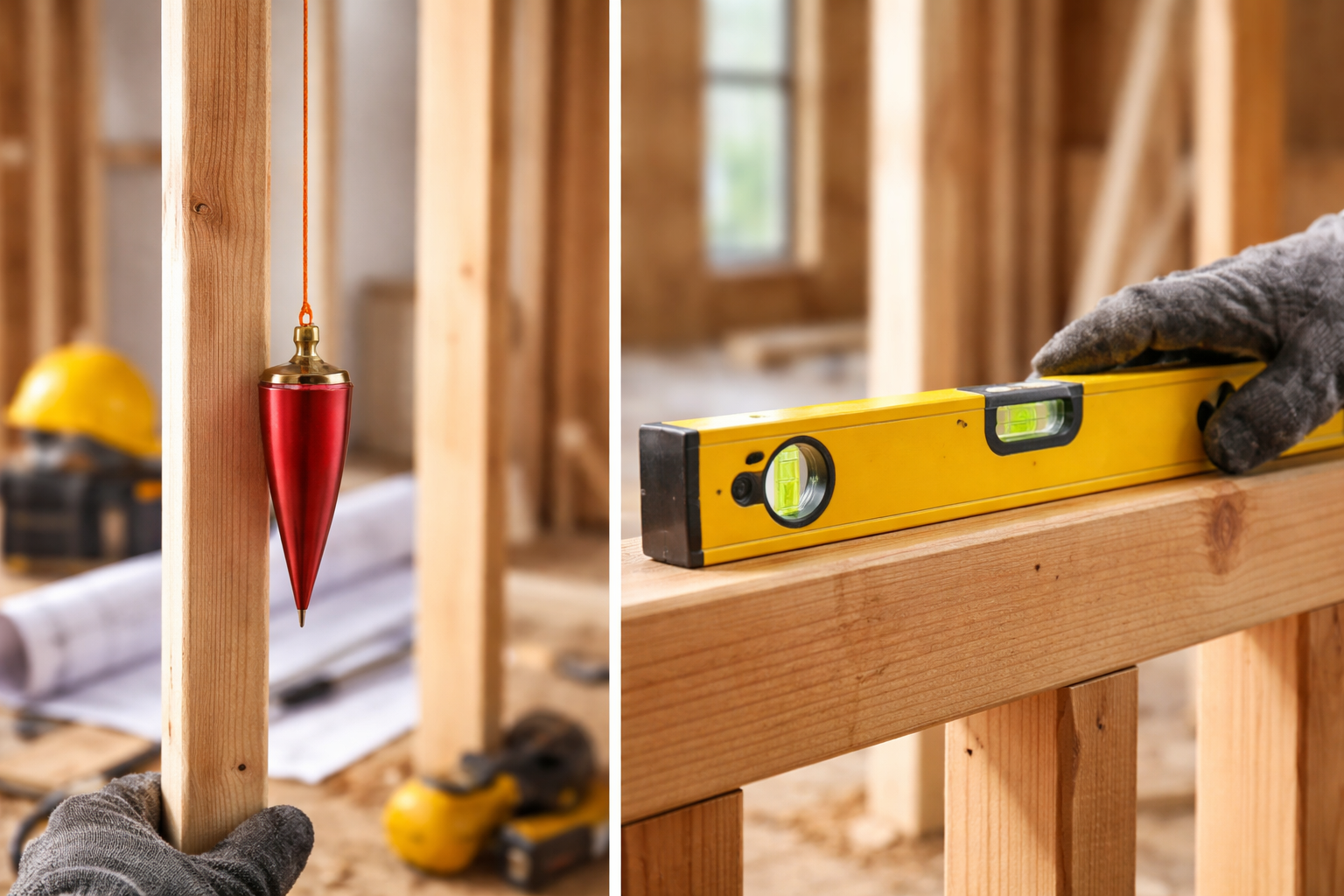
The most common tool is a spirit level. You have probably seen one. That little tube with the bubble inside. When the bubble sits perfectly between the two lines, your surface is level. Simple, but effective.
For larger areas, builders use laser levels or transit levels. These shoot a laser line across a space, giving a reference point that is perfectly horizontal. On big construction sites, this is how crews make sure entire floors are level before moving forward.
Common Problems When Things Are Not Level
Floors that slope can cause all sorts of issues. Appliances that need to be level to function properly (like washing machines and refrigerators) will not work right. You will hear weird noises, or they will vibrate across the room.
Doors and windows installed on unlevel surfaces will not operate smoothly. You will get gaps that let in drafts and bugs. Over time, this puts stress on hinges and frames, causing premature wear.
Understanding Plumb: The Vertical Truth
Now flip your thinking 90 degrees. Plumb is all about that vertical alignment. When a wall is plumb, it stands straight up without leaning forward, backward, or to either side.
This might seem less important than the level at first glance. But think about it. If your walls are not plumb, nothing that attaches to them will hang correctly. Pictures will tilt. Cabinets will not mount flush. And if the lean is bad enough, you could have structural issues where the walls are not properly supporting the weight of the roof.
Tools for Checking Plumb
The plumb bob is the old school method. Literally just a weighted string. Gravity pulls the weight straight down, giving you a perfect vertical reference line. Builders still use these, especially in tight spaces where other tools do not fit.
But most modern construction relies on spirit levels again, just held vertically instead of horizontally. Laser levels also work for checking plumb on walls and other vertical surfaces.
When Plumb Goes Wrong
Ever walked into a room where the walls seem to lean? It feels unsettling, even if you cannot quite put your finger on why. That is your brain recognizing that something is off with the plumbing.
More practically, walls that are not plumb create cascading problems. Door frames installed in out-of-plumb walls will not be square. The doors will not close properly or will require constant adjustment. Crown moulding and other trim work become difficult because nothing lines up the way it should.
In severe cases, walls that are significantly out of plumb can indicate foundation settlement or structural movement. That is when you need professionals like Virk Construction Management to assess whether you are looking at a cosmetic issue or something more serious.
How These Two Work Together
Here is where it gets interesting. Plumb and level are not independent concepts. They rely on each other. For a building to be properly constructed, walls need to be plumb AND the floors and ceilings they connect to need to be level.
Think of it like a coordinate system. Level gives you the X axis. Plumb gives you the Y axis. Together, they create the framework that makes a building square, stable, and functional.
The 90 Degree Relationship
When something is truly level and something else is truly plumb, they meet at a perfect right angle. This is what builders mean when they talk about things being "square." Corners should form 90-degree angles. Walls should meet floors at right angles. Door frames should be perpendicular to the floor.
Get any of these relationships wrong, and suddenly you are trying to fit rectangular materials into trapezoidal spaces. Nothing works the way it should.
Real World Applications in Canberra Homes
Living in the ACT means dealing with varying soil conditions and terrain. The ground shifts. Foundations settle. Old buildings move over time. This makes understanding plumb and level even more important for homeowners.
Renovation Considerations
If you are renovating an older Canberra home, chances are nothing is perfectly plumb or level anymore. Small amounts of movement are normal. But before you start knocking down walls or installing new fixtures, you need to know what you are working with.
Professional builders will assess the existing structure first. They will identify which surfaces are close enough to work with and which need correction. Sometimes you can build out a wall slightly to make it plumb without major structural work. Other times, you might need to address foundation issues first.
New Construction Standards
Modern building codes in Australia have strict tolerances for plumb and level. New homes built by reputable companies like Virk Construction Management will be constructed to meet these standards. Walls should not deviate more than a few millimetres from plumb over their height. Floors should be level within similar tight tolerances.
These standards exist for good reason. They ensure structural integrity and make sure all the building materials and fixtures designed for square spaces actually fit properly.
DIY Tips for Homeowners
You do not need to be a professional builder to check if things are plumb and level in your home. A decent spirit level costs maybe twenty or thirty dollars and can tell you a lot.
1. Checking Walls
Hold your level vertically against the wall in several spots. Check near corners and in the middle. If the bubble is not centred, your wall is out of plumb. Small deviations might not matter. Big ones probably need attention.
2. Checking Floors
Put your level on the floor in different directions. Walk around the room and check multiple spots. Some variation is normal, especially in older homes. But if you are seeing significant slopes, you might want a professional opinion.
3. When to Call the Professionals
If you notice doors sticking, cracks appearing in walls or ceilings, or obvious slopes in floors, do not ignore it. These can be signs of foundation issues or structural movement. Getting an expert assessment early can save you serious money down the line.
The Bottom Line
Plumb and level are not just construction jargon. They are the fundamental principles that keep buildings standing straight, functioning properly, and lasting for decades. One measures vertical accuracy, the other horizontal. Together, they create the framework for everything else.
Whether you are building new, renovating, or just trying to hang shelves that actually look straight, understanding these concepts helps you make better decisions. And when you do need professional help, knowing what builders are talking about makes the whole process smoother.
Next time you are in a building, and something just feels off, you will probably know why. Chances are, something is not quite plumb or level. And now you will know exactly what that means.